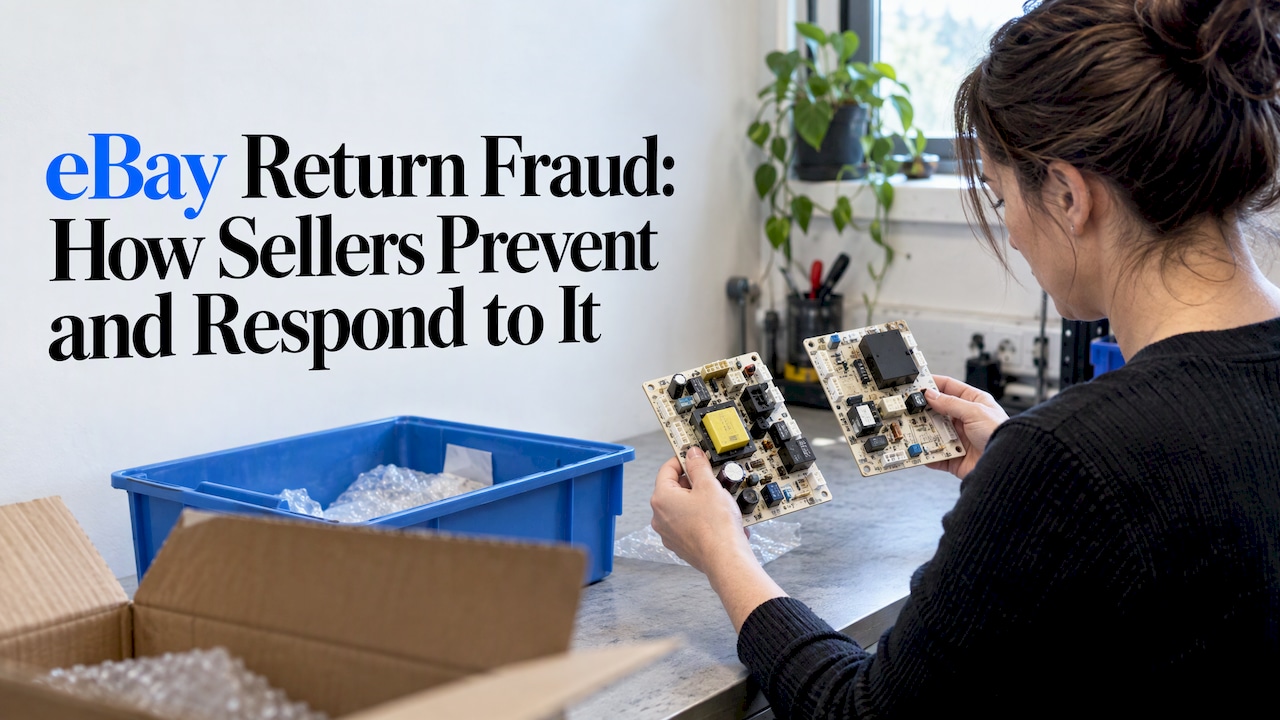
When a buyer opens an item not as described claim (INAD, or SNAD in forum shorthand), eBay's Money Back Guarantee puts the seller on a short clock: you must resolve the case, and if the item is coming back, you are the one responsible for return shipping. The practical goal is therefore twofold. Answer quickly with documented facts, and keep the listing and the buyer history clean enough that a false claim is easy to identify and report. This guide covers the sequence of a claim, the evidence that matters, the rules on returns and refunds, what to do when the claim looks abusive, and how to write listings, especially for appliance parts, so fewer claims start at all.
What happens when a buyer opens an INAD claim
An INAD claim starts when a buyer reports that what arrived differs from the listing: the wrong item, a different condition, a missing component, a size that does not match the stated measurements, or a defect the listing never mentioned. eBay's guarantee covers the purchase price and original shipping on eligible purchases, and the buyer is told to contact the seller first.
The sequence usually looks like this:
- The buyer reports the problem and requests a return or a resolution.
- You choose how to respond: contest the claim with proof that the item was described properly, send a replacement, or refund the buyer. eBay's own dispute resolution tutorial lists these three options and gives sellers seven days in the US to take one of them.
- If the issue is not resolved after three business days, the buyer can ask eBay to review, and eBay may decide the case under the Money Back Guarantee.
- If a return is approved, the buyer ships the item back and the refund follows once the return is verified.
The point most sellers underestimate is the second step. Contesting a claim is not the same as ignoring it, and a seller who says only "it was fine when it left here" gives eBay nothing to weigh. A contest needs specific proof that the buyer's complaint does not match the listing.
The first 24 hours: how to respond
Speed and tone matter because every message you send becomes part of the case record. A workable routine:
- Read the claim against your listing, not against your memory. Open the live or archived listing and compare each complaint with the title, condition field, item specifics, description and photos.
- Reply once, politely and specifically. Acknowledge the problem, state what the listing said, and ask for what you need to resolve it.
- Request photo evidence. Ask for clear images of the item, the defect, any labels or model numbers, and the packaging. A legitimate buyer can usually provide these within a day.
- Decide whether to resolve or contest. If the listing was unclear, a prompt partial refund or return can cost less than a fight. If the listing was accurate and the buyer's claim contradicts it, contest with evidence.
- Keep every exchange inside eBay messaging. Off-platform messages are not part of the record eBay reviews.
Resist the urge to argue about the buyer's character. A factual comparison of the listing and the claim is more persuasive than an accusation, and it protects your account if the case is escalated.
What evidence to send
eBay's guidance on contesting is plain: the proof must show that the item was described properly, and a typical example is a listing that clearly describes the item as used. The table below maps common complaints to the evidence that tends to answer them.
| Buyer complaint | Evidence that answers it | Where it comes from |
|---|---|---|
| "It is used / scratched / worn" | Condition field, description text and photos showing the wear | Your listing, archived |
| "It is the wrong size" | Stated measurements and a photo of the item beside a ruler | Listing and your own photo |
| "It does not fit my appliance" | Part number, listed models, compatibility notes | Item specifics and description |
| "It was damaged" | Packing photos, weight record, tracking history | Your shipping records |
| "It is not the item I sent back for" | Serial numbers, labels or marks photographed before shipping | Pre-shipment photos |
| "It is not authentic" | Supplier invoices and authenticity documents | Your purchasing records |
Two habits make this table usable in practice. First, photograph every higher-value item before it goes into the box, including labels, serial numbers and any existing flaws. Second, save a copy of the listing as published, because edits made after a sale can confuse the record.
Return shipping, refunds and the counterfeit exception
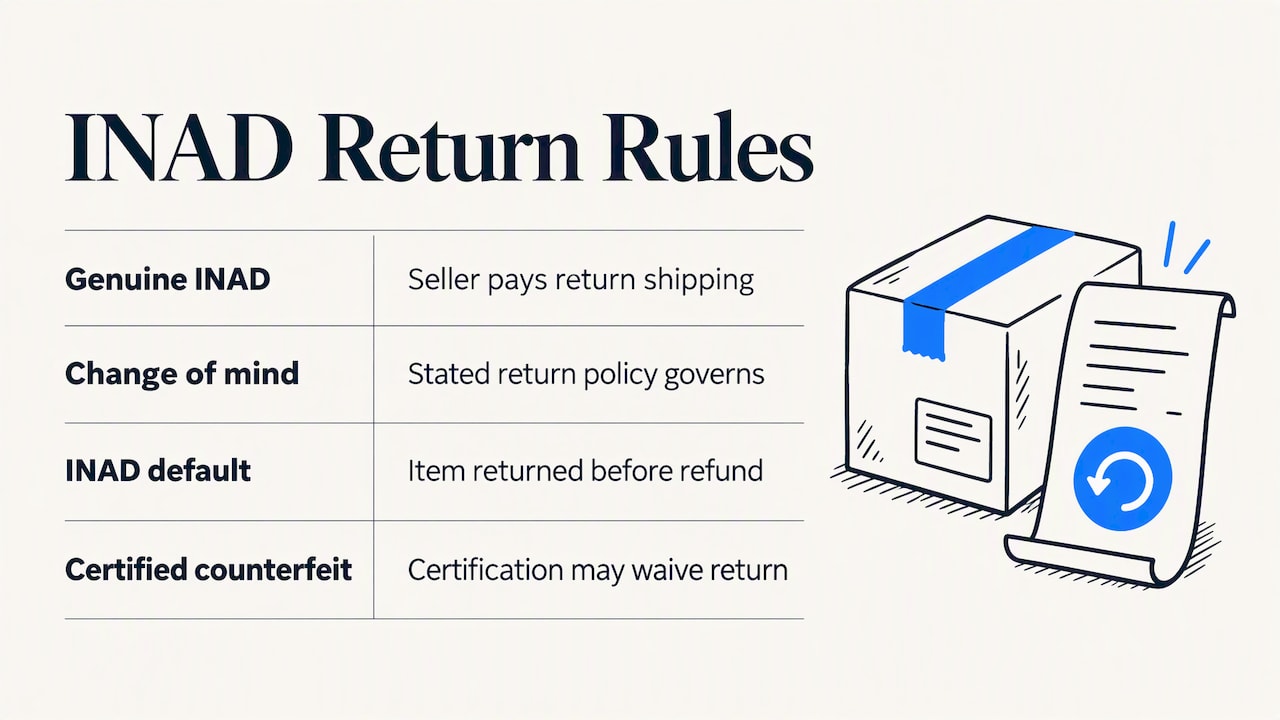
On eBay.com, the cost of returns in an INAD case is decided by the reason for the return, not by the policy in your listing. A "no returns" setting does not remove the guarantee: if the buyer receives the wrong item or one that is broken, damaged or faulty and was not described that way, they are entitled to return it for a refund even if the seller does not offer returns. In those cases, the seller is responsible for return shipping.
This is the rule behind the forum complaints about paying to receive back an accurately described item. If the buyer's reason is genuine INAD, eBay treats the shipping as your cost. If the reason is a change of mind, your stated return policy governs. That is why the reason code a buyer selects, and whether it is truthful, matters so much.
By default, the original item must come back before the refund in an INAD case. The exception is a certified counterfeit claim: when a buyer provides certification from a manufacturer or law enforcement that the item is not authentic, the return requirement can be waived. Sellers of branded goods, collectibles and cards should keep supplier documentation for exactly this scenario, and it helps to understand how fakes are identified in a category. Collectors use quick tests for spotting fake cards that illustrate the kind of detail a certification process looks at.
Partial refunds and returns in a different condition
If you accept a return and the item comes back in a different condition than you sent it, eBay's seller protections allow a deduction. For eligible sellers, you can deduct up to 50% from the refund and report the buyer, provided you follow eBay's guidelines. Document the condition on arrival with photographs before you issue any refund, and compare them with your pre-shipment photos.
When the claim looks false
Some claims describe a different transaction from the one that took place: the listing said "used, untested" and the buyer says it does not work, or the stated size was correct and the buyer says it is too large. eBay's abusive buyer rules address this directly. The Abusive Buyer Policy prohibits making a false claim that an item is not as described when it matches the listing, and prohibits returning an item that differs from the original. A seller who believes a buyer has done this can report the buyer to eBay, which reviews the evidence and circumstances and may act.
A sensible escalation path is:
- Respond to the case on time and with evidence, so that your own record is clean.
- Report the buyer through eBay's reporting route once the facts are clear.
- Keep all photos, messages and tracking in one folder per order.
- Avoid negotiating outside the platform, particularly if a buyer links a threat of negative feedback to a demanded refund. Our guide on feedback extortion and preserving evidence covers that situation.
For a broader look at patterns where claims, returns and chargebacks overlap, see our article on return fraud on eBay.
How seller protection fits in
Seller protection depends on your standing. eBay states that Top Rated Sellers in the US who list on eBay.com receive additional protections when they offer returns of 30 days or longer, and the same page describes protection against false claims. Protection can also be lost: eBay says that a history of abusing protections, such as reporting false claims when the item was correctly described, puts it at risk. The lesson is to report only cases where your evidence is solid.
If you are working toward the higher tiers, our explanation of how eBay seller levels work shows how service metrics feed into eligibility, and what seller protection covers and what it does not sets realistic expectations. Where the buyer escalates to a card chargeback instead of an eBay case, see chargeback protection for US sellers.
Preventing claims through better listings
A large share of INAD claims begin with a listing that left room for interpretation. Three areas deserve the most attention.
Condition and defects
State condition in the condition field and again in the first lines of the description. Photograph every flaw rather than describing it in words alone. For used and untested goods, say precisely what has and has not been tested.
Measurements and specifications
Give dimensions in a consistent unit, include a photo with a scale reference, and list the specifics a buyer would otherwise assume. A listing that says "fits most models" invites a dispute; one that lists part numbers does not.
Compatibility for appliance and vehicle parts
Wrong-part returns are the most common INAD pattern in parts categories. A trade analysis estimates that incorrect fitment data accounts for close to 20% of returns in parts, and it argues that dimensions and compatibility data matter more than marketing copy. In eBay Motors, the parts compatibility feature lets you list compatible vehicles in a standardized tab, so you do not need to repeat fitment in the title. eBay also positions its dedicated compatibility tools as better than a fitment list in the description because they allow search filtering.
For household appliance parts, where no equivalent tool may apply to your category, the same logic holds: put the OEM part number, the cross-referenced numbers and the model numbers it was verified against in the item specifics and description. If you are not sure of a fit, give enough identification detail, such as the part number from a specific model, and let the buyer verify the match instead of making a guarantee you cannot support. SafeBay includes an appliance parts compatibility lookup for exactly this research step, and the free listing analyzer can score a draft listing before you publish it.
Communication that shortens cases
Response time is part of the outcome. A buyer who waits three business days without a resolution can ask eBay to step in, so the practical standard is to reply within one business day, even if the reply is a request for photos. Keep each message short, name the order, quote the relevant line of the listing and state the next step. Templates help, provided each message still addresses the buyer's actual complaint. SafeBay's AI messaging and feedback reply tools are designed to draft these responses inside eBay's workflow, and the free feedback generator is a low-commitment way to try the approach.
Our perspective: prevention starts before the order
The INAD process is built around the claim, but the cheapest dispute is the one that never opens. Since 2008, sellers have been unable to leave negative feedback for buyers, which means a buyer who files a questionable claim carries no visible record into the next seller's inbox. Each seller sees only their own incident, and the pattern across sellers is invisible.
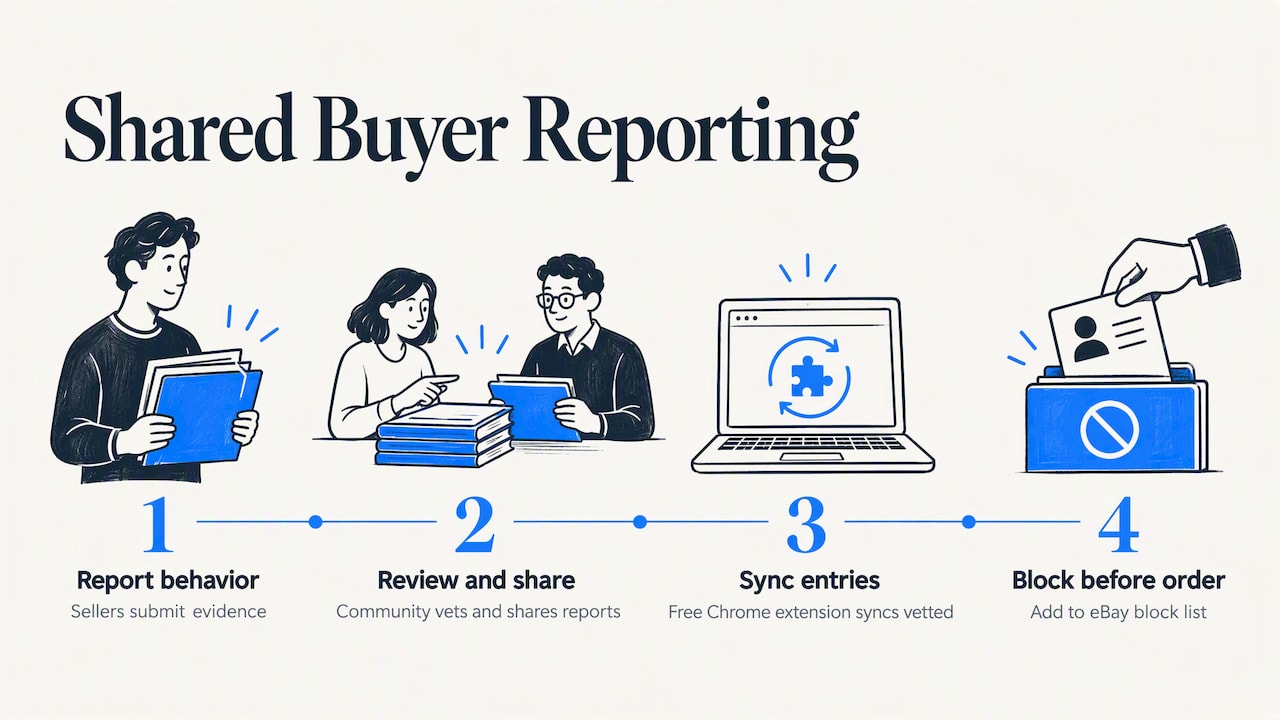
That is the gap we designed SafeBay to address. Sellers can report adverse buyer behavior with evidence; reports are reviewed and shared across the community; and the free Chrome extension syncs vetted entries to the eBay Blocked Buyers list, so the buyer can be blocked on your account before an order. Private and public blocks are kept separate, the reason and date of each listing are retained, and appeals are supported, because accountability should apply to the blacklist as well as to buyers. The aim is not to avoid every dispute, since honest buyers do receive imperfect items, but to reduce repeat exposure to the same problem buyer while your listings and replies do the work on genuine cases.
In our view, a defensible INAD workflow has three layers: accurate listings, fast documented replies, and a shared record of abuse. Each is useful alone, and together they reduce both the number of claims and the effort needed to answer them.
— Mykola
Putting this into practice with SafeBay
If you want to check a buyer's history before shipping or block repeat problem accounts automatically, start with the free plan, which includes basic features and limited AI usage. Paid plans are listed at $9.95 per month for Basic and $59.95 per month for Pro, with Enterprise at $599.95 per month. You can compare the plans on our site, install SafeBay Companion for blocked buyer syncing and real-time risk alerts, or use the buyer status check on a specific account.
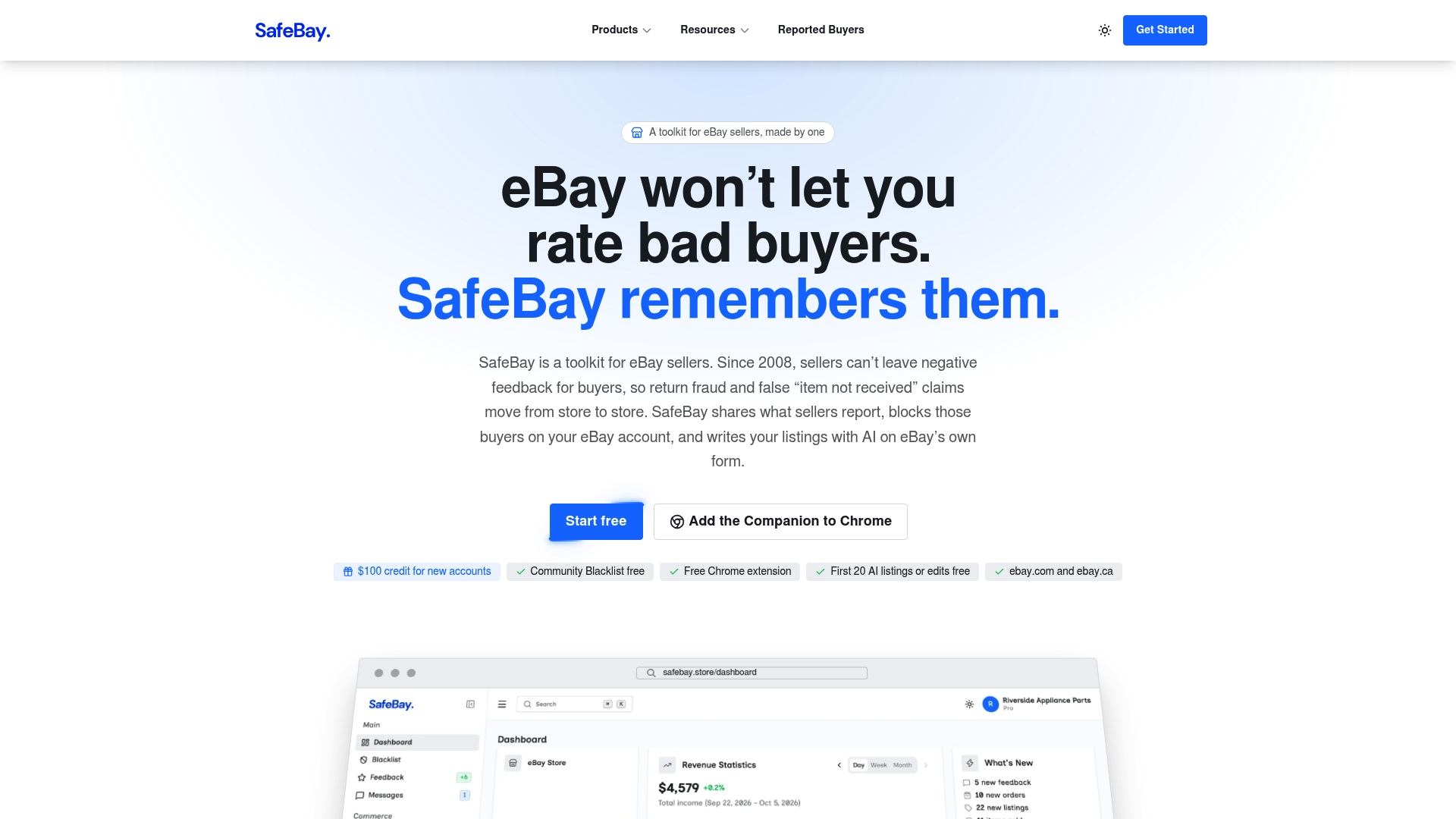
For an independent view of how the product fits a seller's protection stack, our SafeBay review explains the features in more detail.
A checklist for every INAD case
- Compare the claim line by line with the archived listing.
- Reply in eBay messaging within one business day.
- Ask for clear photos of the item, defect, labels and packaging.
- Choose to refund, replace or contest, and attach proof if you contest.
- On return, photograph the item's condition before refunding.
- If the claim contradicts an accurate listing, report the buyer and keep your evidence together.
- After the case, revise the listing wording that caused confusion.
FAQ
What happens if an item is wrongly described on eBay?
The buyer can request a return or refund under the Money Back Guarantee, and the seller is responsible for return shipping when the item is returned for not matching the listing. The seller can refund, send a replacement or contest with proof that the listing was accurate. If the issue is unresolved after three business days, the buyer can ask eBay to step in.
How does seller protection work on eBay?
Eligibility depends on your seller standing and return policy. In the US, Top Rated Sellers on eBay.com who offer 30-day or longer returns receive additional protections, including for false not as described claims. Sellers who abuse protections, for instance by reporting claims that were valid, can lose them.
How do I tell if a buyer is making a false claim?
Compare their complaint with your listing, and ask for clear photos. A claim that contradicts the stated condition, measurements or part number, or a returned item that differs from the one you sent, are warning signs. eBay's abusive buyer policy prohibits both, and you can report the buyer for review.
Do I have to accept a return if the item was described accurately?
A genuine INAD return is required, but the buyer's claim has to match the listing for it to be genuine. If the claim contradicts an accurate listing, contest it with evidence and report abuse where appropriate. Never refuse silently, because unanswered cases tend to be decided for the buyer.