

If a buyer demands money, a refund, or free items in exchange for good feedback or to avoid negative feedback, that is feedback extortion under eBay policy. Do not pay, do not negotiate, and keep every written message. This guide explains how to recognize the pattern, gather the evidence eBay needs, report it correctly, and reduce the chance of a repeat.
TL;DR:
- Capture the full message thread, timestamps, buyer username, item number, and any posted feedback; report the exact conditional demand through eBay’s Resolution Center.
- Clear policy violations are typically processed within 24 hours; if eBay denies removal, appeal with the buyer’s exact words, a screenshot, and the policy named.
- Keep replies inside eBay messaging, use one neutral response that points to the standard return process, and stop engaging if the buyer repeats the demand.
- Set buyer requirements and block documented abusers, while tightening listings with condition details, photos, dimensions, included items, and clear return terms.
Table of Contents
- What does eBay's feedback extortion policy actually say?
- How do you spot feedback extortion in a buyer's messages?
- What should you do in the first hours after an extortion attempt?
- How does eBay handle removal requests, and how long does it take?
- How can you reduce exposure before a buyer ever threatens you?
- Why does evidence beat argument every time?
- How should you respond to an extortion attempt without escalating it?
- Are there legal or outside dispute options for feedback extortion?
- How can you optimize listings to make extortion harder?
- How can AI-generated descriptions prevent the misunderstandings that lead to extortion?
- What have sellers gained from SafeBay's approach to extortion?
- What matters most, and what is overrated?
- How do we help sellers prevent and act on feedback extortion?
- FAQ
- Sources
What does eBay's feedback extortion policy actually say?
eBay's feedback policies treat feedback as a record of how a transaction went, not as a bargaining chip. Feedback extortion is the act of using the threat of negative feedback, or the promise of positive feedback, to force the other party into giving something they do not owe. Feedback manipulation is the broader category: any attempt to influence ratings through pressure, trades, or conditions.
The scenarios that reach seller forums follow a handful of patterns. A buyer receives the correct item, then says they will leave negative feedback unless you grant a partial refund. A buyer asks for an extra item that was never part of the listing, with feedback as the price. A buyer refuses to return an item and ties a good rating to keeping both the product and the money. Auction Nudge documents these same situations and recommends reporting them through the Resolution Center while keeping the message trail.
The rules cut both ways. Sellers may send a neutral note inviting feedback, but they may not make an offer, a discount, or a refund depend on a positive rating, and they may not pressure buyers who have already left a negative one. If you was uncomfortable seeing your own message quoted in a policy review, rewrite it.
How do you spot feedback extortion in a buyer's messages?
Extortion has a recognizable shape: a demand, a deadline, and feedback as leverage. Genuine complaints describe a problem and ask for a fix. Extortion describes a penalty and asks for a payment.
Watch for these patterns:
- A refund, discount, or free item offered "or else" a negative rating will follow.
- A demand that arrives only after you declined a return or closed a dispute.
- Threats stated as a trade: "I'll leave positive feedback if you send money."
- Requests for items, upgrades, or services the listing never included.
- Repeated messages that escalate in tone or shorten the deadline.
The written thread is the deciding evidence. The most critical proof is the message where the buyer explicitly conditions feedback on money, goods, or services, and eBay's guidance is to keep all written communication. A buyer can delete a message on their side, which is why your own screenshot matters.
Edge cases need judgment. A vague "I'm very disappointed and will review accordingly" is a complaint, not extortion, because nothing is being demanded. Answer it professionally and solve the problem. A message that names a price for silence crosses the line.
Pro Tip: Save the whole thread, not only the worst message. Context showing that the demand came after your refusal makes the conditional nature obvious to a reviewer.
What should you do in the first hours after an extortion attempt?
Speed matters less than order. Follow these steps in sequence so you do not damage your own case.
- Stop negotiating. Do not agree to the demand, counter it, or explain yourself at length.
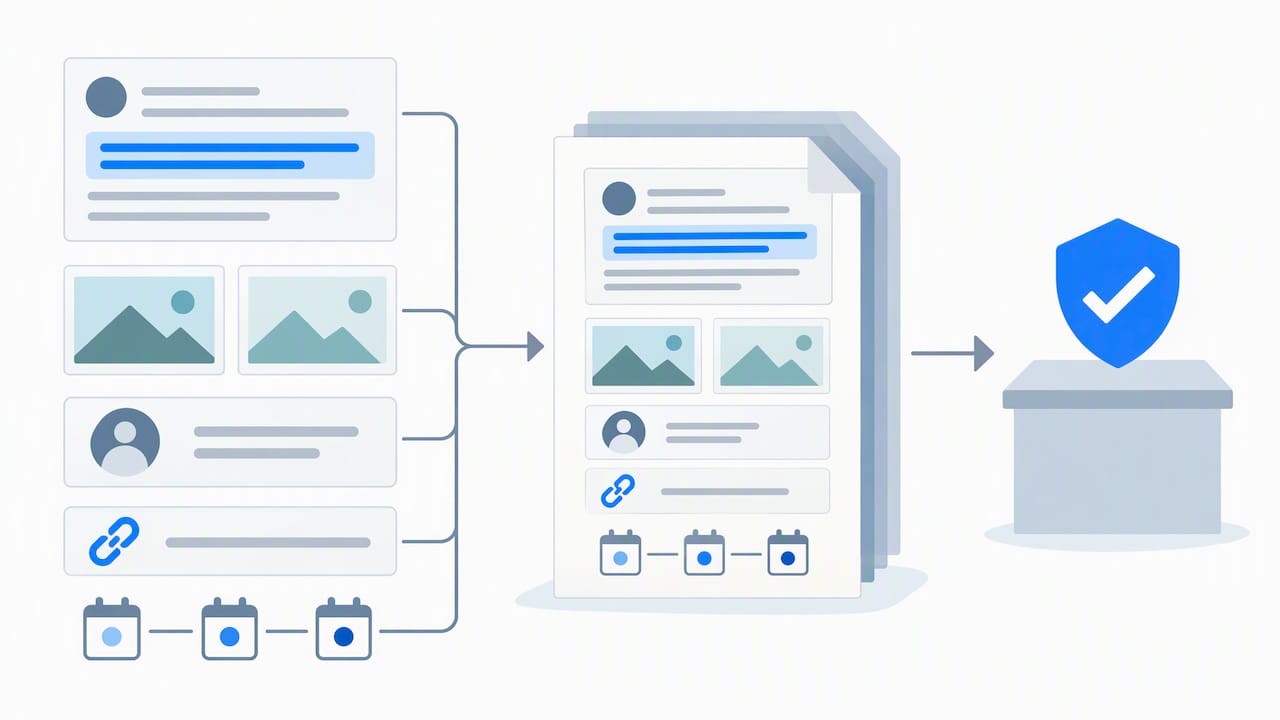
- Capture evidence immediately: timestamped screenshots of the full message thread, the buyer's username, the item number, and the date and time of each message.
- Save a direct link to the feedback if it has already been posted, along with a screenshot of the rating and comment.
- Open the Resolution Center or the feedback removal request flow and select the option that matches the policy violation, naming extortion or manipulation specifically.
- Attach your screenshots and write two or three plain sentences: what was demanded, what it was tied to, and when it happened.
- Keep all further contact inside eBay messaging so every exchange stays on record.
eBay advises sellers not to pay or comply with unreasonable demands of this kind.
If the feedback is already live and your first removal request is denied, do not resend the same text. Reread the thread, find the exact sentence that sets the condition, quote it, and submit a new request that cites it. Platform guides on a related problem, Google review extortion, list the same evidence items: screenshots, direct links, sender details, and a short timeline.
Pro Tip: Name the policy in your report. A request that says "feedback extortion" with a quoted condition is easier to route than one that says "unfair buyer."
How does eBay handle removal requests, and how long does it take?
Requests generally pass through two layers. Automated systems act as the first line of defense, scanning for clear policy violations and removing feedback quickly when the signals line up. Ambiguous cases move to manual review, where a person reads your evidence and decides.
Expectations should match the evidence you submit. When the proof is clear, feedback removed for policy violations is typically processed within 24 hours. A message that states the condition outright tends to fall in this group. Cases built on tone, implication, or a missing screenshot take longer because a reviewer has to infer intent.
If an automated request is denied, a concise, evidence-based manual appeal is often what resolves it. A strong appeal does three things:
- Quotes the exact words that set the condition.
- Identifies the policy being violated.
- Attaches the screenshot rather than describing it.
Keep the appeal short. Reviewers handle volume, and a long account of how the dispute started buries the one line that matters. Avoid emotional language and avoid accusing the buyer of motives you cannot show. State what was said, when, and why it violates the policy.
If the appeal is also denied, contact eBay support, reference your earlier request numbers, and ask for a review of the evidence rather than a rehash of the story. Keep records of every case number so you can show a pattern if the buyer targets you again.
How can you reduce exposure before a buyer ever threatens you?
Prevention is cheaper than cleanup. eBay gives sellers two built-in levers, and both are worth setting up deliberately.
eBay's seller protection settings let you block specific buyers and set buyer requirements, such as a minimum feedback score. Those rules filter out accounts most likely to cause trouble before they can purchase.
Beyond the settings, build habits:
- Review your blocked-buyer list regularly and add any account that has threatened you.
- Report repeat abusers rather than only absorbing the loss. Reports help eBay track patterns across the platform, so the same tactic stops working on other sellers.
- Check your feedback feed weekly for sudden clusters of low ratings or oddly similar comments.
- Look at a buyer's history on high-value or high-risk sales before you ship.
- Keep your message tone neutral so any later demand stands out clearly.
Our own buyer status checker supports that last habit, and we explain the limits of the native list in why eBay's blocked buyer list isn't enough.
Why does evidence beat argument every time?
We build tools for eBay sellers, so we see the same sequence repeat. The sellers who recover fastest are not the ones who write the most persuasive message. They are the ones who saved the thread before the buyer deleted it and who filed a short, specific report.
Paying is the move we caution against most firmly. Press coverage of these tactics, including reporting in the Sydney Morning Herald, stresses that giving in often fails to end the problem, and that reporting to the platform can lead to refunds and action against the account. A buyer who learns that pressure works has no reason to stop, and the payment itself can look like an admission when you later argue the case.
Our editorial view: treat every demand as a documentation task first and a customer-service task second. Calm, boring, and thorough wins.
How should you respond to an extortion attempt without escalating it?
Your goal is a reply that protects your record and gives the buyer nothing to react to. One short message is usually enough, and in some cases silence after reporting is better.
A workable reply has four parts: acknowledge the message, restate that you cannot tie refunds or other terms to feedback, point to the normal return or dispute process, and stop. For example, you can say you are glad to help with any problem with the item through eBay's standard process, and that feedback and resolution are handled separately. No threats, no sarcasm, no counteroffers.
Some practical rules keep tempers down:
- Do not mirror the buyer's tone, even if the message is insulting.
- Do not promise a refund "just to make this go away."
- Do not mention your plan to report in a way that reads as a threat of your own.
- Keep all replies inside eBay messaging so the thread stays complete.
- Wait before responding. A cooled-down draft reads better to a reviewer than a fast one.
If the buyer keeps pushing after your single reply, stop answering and file the report. Further messages from them become additional evidence rather than a conversation you have to win. You can also add the account to your blocked list once the case is documented, which prevents new purchases while leaving the existing case intact.
Professional restraint also protects you if the matter is ever reviewed by someone outside eBay. A seller whose messages are polite and consistent is easy to believe.
Are there legal or outside dispute options for feedback extortion?
For most sellers, eBay's own process resolves the situation, and it should be your first stop. Outside options exist, but they are slower and usually out of proportion to a single feedback dispute.
The main routes, from lightest to heaviest:
- Platform escalation. Contact eBay support with your case numbers and evidence. This is a straightforward place to start.
- Payment or marketplace channels. If money changed hands or a refund dispute is attached to the sale, the related claim process may address it separately.
- Law enforcement reports. Demanding money under threat can be unlawful in many places. If a buyer's messages are explicit or persistent, a report to local police or a consumer protection agency creates an official record. We cannot tell you whether a specific message meets a legal definition in your location.
- Legal counsel. An attorney can send a formal letter or advise on claims, which is worth considering only when the losses are significant or the harassment continues.
Every one of these options depends on the same asset: a clean, complete record. Screenshots with timestamps, the buyer's username, item numbers, and your report history make any later step possible. For rules on whether specific conduct is illegal where you live, consult a qualified professional or your local consumer authority rather than relying on a general guide.
How can you optimize listings to make extortion harder?
Most extortion starts with a gap between what the buyer expected and what arrived. A listing that closes that gap removes the buyer's excuse and weakens any later demand.
Start with accuracy. Describe condition honestly, name flaws, and photograph them. Include dimensions, model numbers, and what is and is not in the box, since "asked for an item that was not included" is one of the common scenarios Auction Nudge describes. If a part is missing, say so plainly rather than leaving it to inference.
Then set clear terms:
- State your return policy in the listing and keep it consistent.
- Use buyer requirements to screen out accounts that carry more risk.
- Photograph the item as shipped and keep those images for disputes.
- Note any compatibility limits, especially for parts and accessories.
- Keep titles and descriptions aligned so the buyer cannot claim a mismatch.
A disciplined listing also makes your evidence stronger. If a buyer later claims the item was "not as described," a precise description with matching photos is the reference a reviewer will compare against. Vague listings force reviewers to guess, and guesses rarely favor the seller.
Review your top sellers every few months. The listings that attract the most disputes are usually the ones with the thinnest descriptions, and fixing them is faster than fighting each case.
How can AI-generated descriptions prevent the misunderstandings that lead to extortion?
AI drafting helps when it produces consistent, detailed descriptions, and it hurts when sellers publish the output unchecked. Treat the draft as a first pass that you verify against the physical item.
Good practice looks like this:
- Feed the tool real facts: condition notes, measurements, included accessories, and known defects.
- Read every line against the item before publishing. A fluent sentence that overstates condition becomes ammunition for a complaint.
- Remove vague marketing phrases and replace them with checkable statements.
- Keep a structure you reuse, such as condition, contents, dimensions, compatibility, so buyers always find the same information in the same place.
- Re-read the final text as a skeptical buyer would and ask what they could misinterpret.
Our listing generation and proofreading run directly on eBay's platform, which keeps the workflow in one place. The tool does not replace your knowledge of the item, though. Accuracy is the point, and a description that is detailed, honest, and consistent leaves little room for a buyer to claim they were misled.
The same thinking applies to buyer communication. We also offer an AI feedback autoreply so responses to ratings stay professional and consistent without eating your time. Review what it sends the same way you review a listing.
What have sellers gained from SafeBay's approach to extortion?
We do not have published, verified case studies of individual sellers resolving feedback extortion incidents, and we will not invent them. What we can describe is the mechanism that our tools are built around, and you can judge it against your own situation.
The sequence we design for is straightforward. A seller preserves the evidence, files the platform report, and then submits the buyer to our community blacklist with supporting detail. Reports are reviewed and shared, and sellers who use our free Chrome extension, SafeBay Companion, have flagged buyers synced to their eBay Blocked Buyers list. That means a buyer who targeted one seller can be stopped before the next sale rather than after it.
Our guide to the community blacklist walks through the reporting flow step by step. Reasons and dates for each listing are kept, so the record stays accountable, and we support appeals when a buyer disputes a flag.
If you have handled an extortion attempt using these steps and want to share what worked, we would value hearing it. Real outcomes from sellers are the proof that matters, and we would rather wait for them than dress up hypotheticals.
What matters most, and what is overrated?
My judgment, based on what the research and policy language support: the single message that states the condition is worth more than every other piece of your case combined. Most seller advice buries that point under generic tips about staying calm and being polite. Calm is useful. Evidence is decisive.
What is overrated is the instinct to resolve the matter quickly by paying. It feels pragmatic, and it is usually the weakest option, because the demand rarely ends with one payment and the payment itself muddies a later report. What is also overrated is arguing with the buyer. Reviewers do not read your rebuttal as a verdict. They read the buyer's words.
Blocking tools deserve more attention than they get. Native settings help, but they work account by account, and an abuser can move on to the next seller. Shared reporting closes that gap, which is why I put it ahead of cleverer listing tricks.
If you do one thing this week, save and organize your message threads before you need them, then set your buyer requirements. Everything else builds on a record you can produce in under a minute.
— Mykola
How do we help sellers prevent and act on feedback extortion?
Preventing a repeat abuser is where we focus. Our community buyer blacklist lets sellers report problem buyers with evidence, after which reports are reviewed and shared. Through the free SafeBay Companion Chrome extension, blocked buyers sync to your eBay Blocked Buyers list, and real-time buyer risk alerts warn you before a sale goes through.
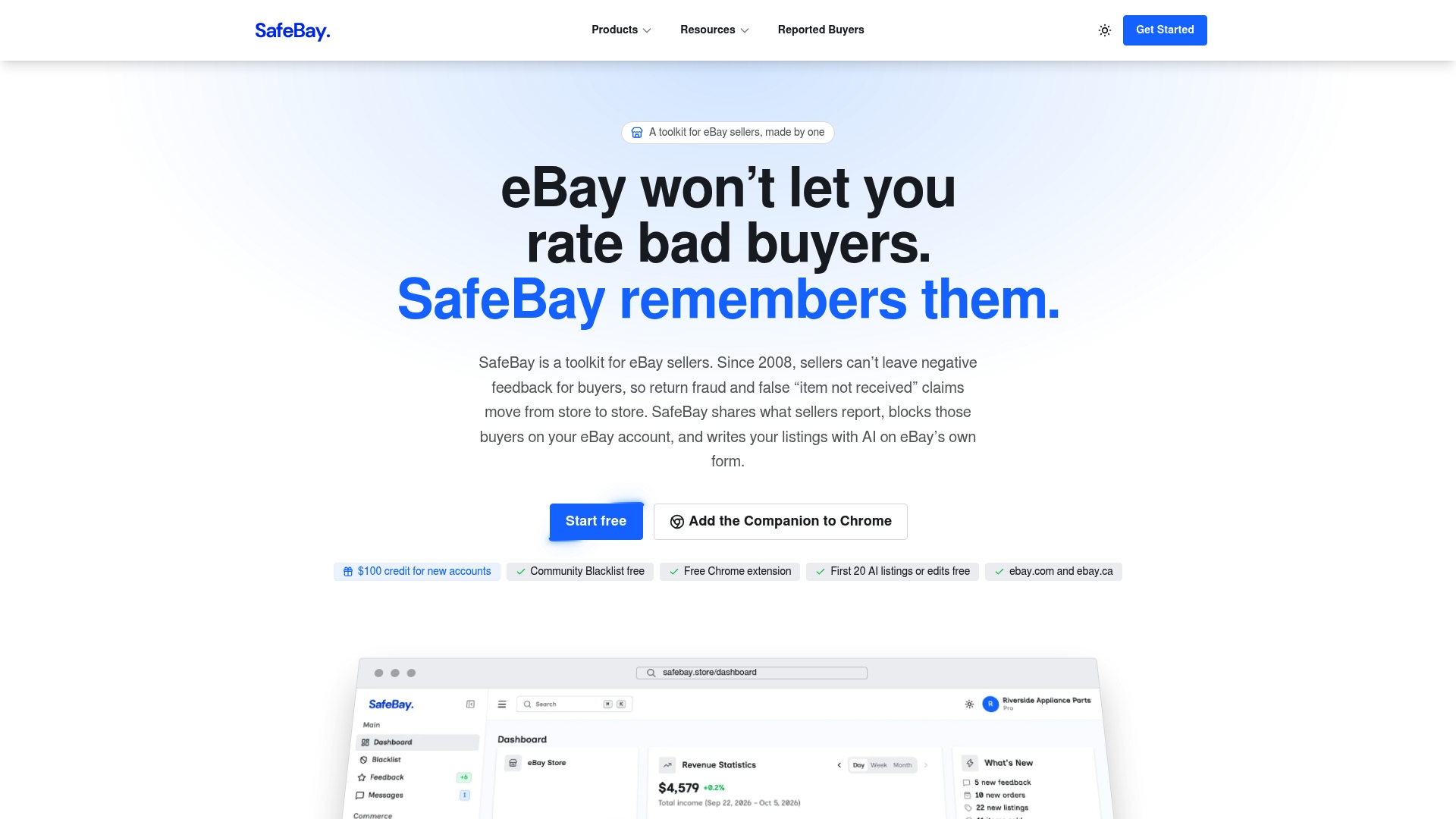
Here is a sensible order of operations. Preserve your evidence and file the eBay report first. Then install SafeBay Companion, check a buyer's record on our buyer status page, and submit repeat abusers through our report-buyer flow. Our free seller tools cover the basics at no cost, and paid plans add higher limits and advanced features. Our Free, Basic, Pro and Enterprise plans start at $0 per month for Free, with Basic at $9.95 per month, Pro at $59.95 per month, and Enterprise at $599.95 per month.
You can start today: install the extension, look up your last difficult buyer, and report them so the next seller never has to deal with the same threat.
FAQ
How do I ask eBay to take off negative feedback?
Submit a feedback removal request through eBay and cite the specific policy violation, such as extortion or manipulation. Attach screenshots of the message where the buyer ties feedback to a demand. When the evidence is clear, removals are typically processed within about 24 hours.
Why do I need to wait to leave negative feedback on eBay?
We cannot point to an eBay source in our research that states a specific waiting period, so we will not give you a number. Check eBay's current feedback rules in your account for the exact timing that applies to your transaction.
What are red flags for eBay buyers?
Watch for conditional demands that tie a refund, discount, or free item to feedback. Other signs include requests for items not in the listing, escalating deadlines, and demands that appear right after you decline a return. Screenshot the thread and report the pattern rather than replying at length.
Is eBay feedback anonymous?
We have no source in our research that addresses feedback anonymity, so we will not guess. Review eBay's feedback documentation for how ratings and comments are displayed on your account and listings.