You've just received another return request from a buyer with zero feedback, and something feels off. You check eBay's blocked buyer list, add them, but the sinking feeling remains—what if other sellers are dealing with this same person? Unfortunately, eBay's built-in protection only goes so far, leaving thousands of sellers vulnerable to repeat offenders who simply move from one victim to the next.
Key Takeaways
- eBay's blocked buyer list only protects you from buyers you've personally encountered, leaving you exposed to thousands of known scammers
- Problem buyers exploit the fragmented nature of individual seller blacklists, targeting new victims who have no warning
- Common eBay scams like return fraud, INAD claims, and switching schemes cost sellers billions annually
- Effective eBay seller protection requires community-shared intelligence, not just individual blocking
- Modern eBay scammer protection tools can identify red flags before a problematic transaction occurs
How eBay's Blocked Buyer List Works (And Its Critical Limitations)
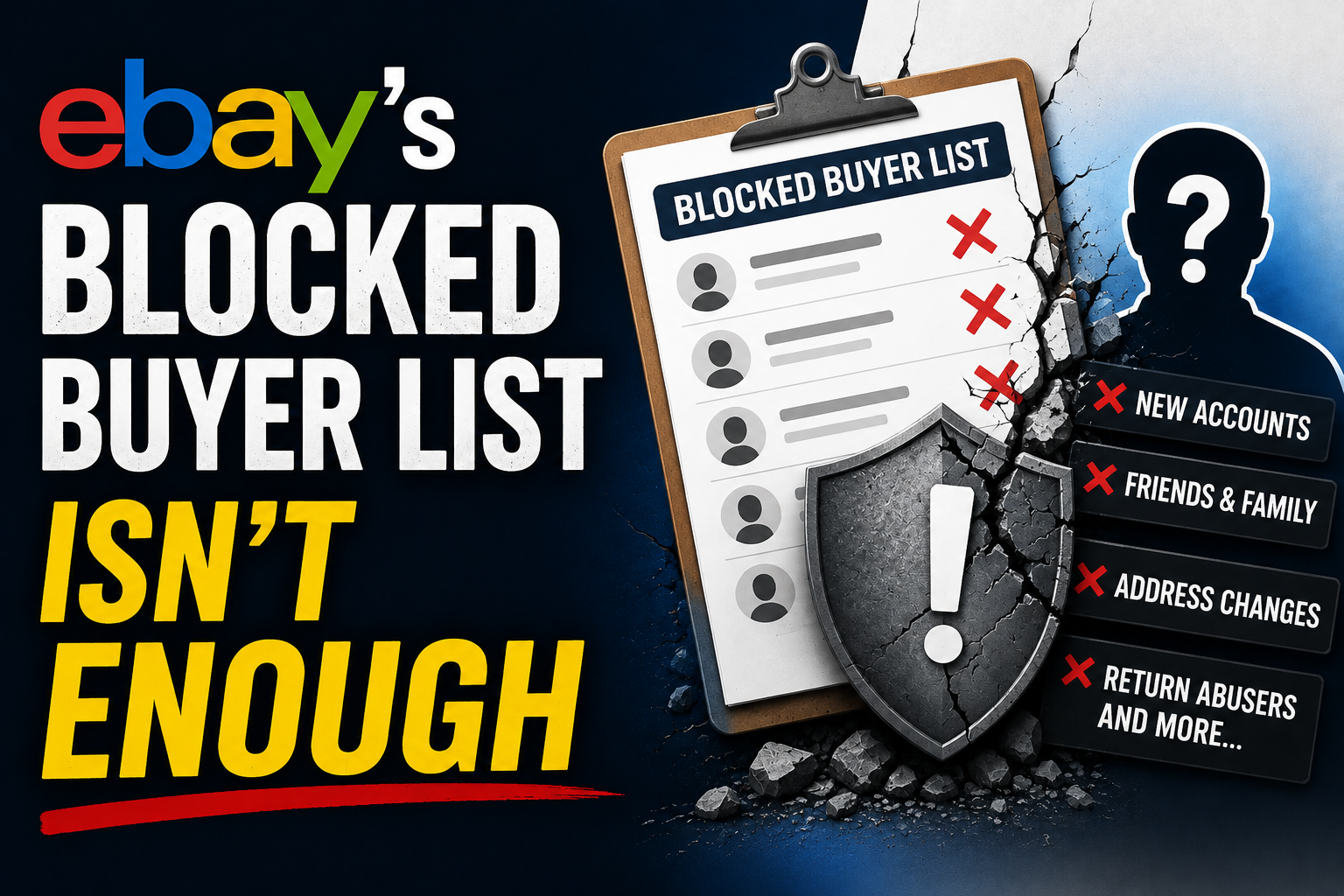
eBay's blocked buyer list allows sellers to prevent specific users from purchasing their items—a basic but necessary tool. When you block a buyer on eBay, they can't bid on or purchase your listings, and they won't be able to send you Best Offers. The process is straightforward: navigate to your account settings, add usernames to your list, and those buyers are blocked from interacting with your store.
But here's the fundamental problem: your blocked list is entirely private and individual. Every seller on eBay is essentially operating in isolation, building their own eBay buyer blacklist based solely on personal bad experiences. One seller in California might block a serial return fraud offender after losing $800 on a laptop scam, while a seller in Florida becomes the next victim the following week—completely unaware of the pattern.
The Information Silo Problem
This fragmented approach to eBay seller protection creates an environment where problematic buyers can operate indefinitely. They simply rotate through sellers, knowing that each new target has no warning system. A scammer might successfully execute return fraud against 10-15 sellers before enough individual sellers happen to block them—and even then, thousands of other sellers remain exposed.
Consider this scenario: A buyer purchases high-end electronics, claims they're damaged, returns a broken item they already owned, and gets a full refund. You block them and move on. But that same buyer continues this pattern with other unsuspecting sellers who have no way of knowing about this person's history.
Common Scams That Exploit eBay's Limitations
Understanding the tactics used by problematic buyers helps illustrate why individual blocked buyer lists fall short of adequate eBay return fraud prevention.
The Classic Return Switcharoo
Buyers purchase authentic items, then return counterfeits or broken versions of the same product. One electronics seller lost $1,200 when a buyer returned a box of rocks instead of a gaming laptop. By the time the seller blocked that account, the scammer had already targeted five other sellers that same month.
INAD (Item Not As Described) Abuse
Serial filers claim items don't match descriptions to force returns with seller-paid shipping, even when items are exactly as listed. These buyers often have patterns visible across multiple sellers—but only if that information were shared.
Partial Refund Extortion
Buyers threaten negative feedback unless sellers offer partial refunds for non-existent issues. They target sellers with perfect feedback ratings who can't afford the damage, knowing individual sellers rarely coordinate to identify repeat offenders.
The Account Rotation Strategy
Sophisticated scammers maintain multiple eBay accounts or create new ones after burning through their reputation. Your eBay blocked buyers list becomes useless when they simply switch to a different username.
Why Community Intelligence Matters for eBay Seller Protection
The most effective fraud prevention in any marketplace relies on shared intelligence. Think about how credit card companies protect merchants—they don't expect each individual store to discover fraud patterns independently. Instead, they aggregate data across millions of transactions to identify threats before they reach the next victim.
eBay sellers need the same advantage. When sellers across the platform can share information about problematic buyers, several things become possible:
- Pattern Recognition: A buyer who files suspicious claims with multiple sellers becomes visible as a threat, not just an isolated incident
- Proactive Protection: Instead of learning the hard way, sellers receive warnings about buyers flagged by the community before completing transactions
- Deterrent Effect: When scammers know their behavior is being tracked across the entire seller community, not just individual stores, the risk-reward calculation changes
- Data-Driven Decisions: Aggregate data reveals trends, helping sellers identify red flags like suspicious buying patterns or account characteristics
One experienced seller who switched to community-based eBay scammer protection reported avoiding six potentially fraudulent transactions in three months—buyers that other sellers had flagged but that wouldn't have appeared on any individual blocked list.
Red Flags to Watch Beyond Your Blocked Buyer List
Even with eBay's blocked buyer list maintained, successful sellers develop additional vigilance habits to protect their businesses.
Account Age and Feedback Patterns
New accounts with zero feedback aren't automatically problematic, but they warrant extra attention for high-value items. Similarly, buyers with feedback that's exclusively positive as a seller but sparse as a buyer may indicate a secondary account being used for fraudulent purchases.
Communication Red Flags
Buyers who avoid eBay's messaging system, pressure for immediate shipping before payment clears, or ask unusual questions about return policies may signal trouble ahead. Trust your instincts when communication feels off.
Geographic and Shipping Inconsistencies
Requests to ship to addresses that don't match the registered account location, or buyers purchasing multiple high-value items with expedited shipping to forwarding services, deserve scrutiny.
Purchase Pattern Anomalies
A buyer suddenly purchasing several expensive items across different categories after months of inactivity might indicate a compromised account being used for fraud.
Building a Comprehensive eBay Seller Protection Strategy
Protecting your eBay business requires multiple layers of defense that go beyond simply blocking buyers after problems occur.
Optimize Your Listing Descriptions
Detailed, accurate descriptions with clear photos reduce legitimate INAD claims and create documentation you can reference if disputes arise. State your return policy explicitly and photograph serial numbers or unique identifying features of high-value items.
Document Everything
Photograph items before shipping, save all communication through eBay's messaging system, and retain shipping documentation. This evidence becomes invaluable when contesting fraudulent claims.
Set Buyer Requirements
eBay allows sellers to set buyer requirements that automatically block buyers who meet certain criteria: unpaid item strikes, policy violation reports, or buyers in locations you don't ship to. Configure these settings as a first line of defense.
Strategic Blocking
Maintain your eBay blocked buyers list actively, but recognize its limitations. Block problematic buyers immediately, but don't rely on this as your only protection strategy.
Join Seller Communities
Connect with other eBay sellers through forums and groups where experiences are shared. While informal, these communities provide intelligence that eBay's built-in tools don't offer.
The Future of eBay Seller Protection: Shared Intelligence Platforms
The evolution of eBay seller protection tools reflects a simple truth: individual sellers shouldn't face organized fraud alone. Modern platforms aggregate anonymized data across seller communities, creating shared intelligence networks that identify problematic patterns before they impact your business.
These tools work by analyzing buyer behavior across multiple sellers, flagging accounts associated with return fraud, payment issues, or other problematic patterns. When a buyer exhibits warning signs in transactions with other sellers, you receive alerts before accepting their order—something impossible with individual blocked buyer lists.
The technology also helps with eBay return fraud prevention by identifying behavioral patterns that individual sellers might miss: accounts that consistently purchase specific product categories before filing INAD claims, buying patterns that correlate with fraud, or accounts linked to known problematic users.
Think of it as the difference between every house in a neighborhood installing their own alarm system versus having a neighborhood watch that shares information about suspicious activity. Both have value, but the collective approach provides substantially better protection.
Taking Control of Your Seller Security
eBay's blocked buyer list serves a purpose, but treating it as comprehensive protection leaves your business vulnerable to countless threats you'll never see coming. The most successful eBay sellers recognize that effective protection requires community intelligence, proactive monitoring, and tools designed specifically for modern fraud prevention.
The question isn't whether to block buyers on eBay—that's a given. The question is whether you're willing to operate with one hand tied behind your back, building your blocklist one painful lesson at a time, or whether you'll leverage shared intelligence that protects you from threats identified across the entire seller community.
SafeBay provides the community-powered eBay scammer protection that individual sellers need, aggregating buyer intelligence across our network to identify red flags before they cost you money. Stop learning about problematic buyers after they've already impacted your business. Discover how SafeBay's shared intelligence platform gives you the protection eBay's built-in tools simply can't provide.