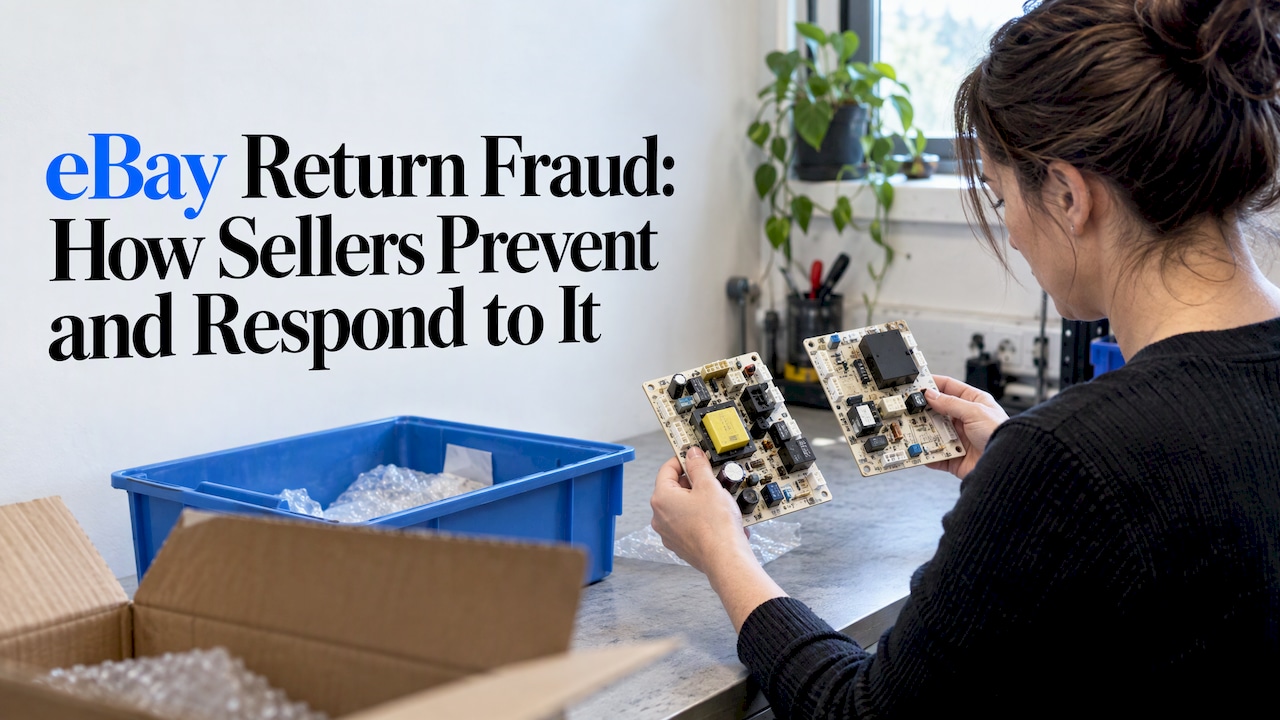
eBay return fraud happens when a buyer misuses the return process to keep both the item and the money, for example by sending back a different item, an empty box or a damaged copy. You can limit the damage with three habits: document every shipment before it leaves, document every return the moment it arrives, and act inside eBay's short response windows. You can then stop repeat offenders from buying from you again.
What eBay return fraud is, and what it is not
A legitimate return is a buyer exercising a right: the item arrived late, does not fit or does not match the listing. A fraudulent return is a buyer using that right as a tool. eBay's own Abusive buyer policy lists misusing returns as a violation. Its examples include returning an item other than the original, using or damaging an item and then returning it, and choosing the reason "not as described" when the item was described accurately.
The distinction matters because a discrepancy alone does not prove intent. A guide on suspect eBay returns makes the same point: a packing mistake, a mixed-up return or a carrier problem can produce an identical result. Your first job is therefore to establish exactly what differs and to preserve proof, not to accuse.
How common is it?
No one publishes a figure for eBay alone, so the best available numbers come from retail in general. The Appriss Retail and National Retail Federation 2022 survey estimated that fraudulent returns averaged 10.4% of total US returns, or $10.40 lost per $100 of returned merchandise accepted. Those figures reflect retailer perceptions, and a later analysis points out that the surveys measure different things: one asks professionals what they believe is fraudulent, while the other scores actual transactions and puts pure fraud at 2%. The practical reading is that a meaningful slice of returns is not a customer changing their mind, and most of that slice is not criminal.
For a marketplace seller the percentage matters less than the unit economics. One swapped laptop, appliance control board or camera lens can erase the margin on dozens of ordinary sales.
The return scams sellers see most often
The tactics repeat across categories, and knowing them tells you what evidence to collect.
| Scam | What the buyer does | What proves it |
|---|---|---|
| Switched item | Returns a different, usually older or cheaper, item | Serial number or unique mark photographed before shipping |
| Counterfeit return | Returns a fake version of a branded item | Pre-shipment photos, branding details, purchase records |
| Broken item | Returns a broken version and keeps the working original | Condition photos from the listing and from packing |
| Empty box | Claims the package was empty or sends back an empty box | Package weight at shipping versus weight at return |
| Misleading tracking | Tracking appears to show a return, but the parcel went elsewhere | Tracking history, scan locations, package weight |
The first four come from a seller guide on return fraud. The last one is a documented pattern in which a buyer changes the shipping address so the barcode is scanned near the seller, making it look as if the item was returned when the box went somewhere else and was probably empty. The tracking record is therefore proof that a box moved, not proof of what was in it.
Sellers of parts and electronics are especially exposed to the swap, because used and original components look alike at a glance. If you sell appliance parts, a returned board with a different revision number is a typical example, and a recorded part number is the evidence that settles it.
Before you ship: build the evidence file
Most return disputes are decided by whichever side has better records. A seller checklist for return fraud recommends photographing serial numbers or unique marks before shipping, filming the packing from the item to the sealed label, and keeping the carrier's weight record. None of this takes more than a minute per order once it is routine.
A practical pre-shipment routine:
- Photograph the item from every angle, with serial numbers, IMEI, engravings or distinctive flaws in frame.
- Photograph accessories and included parts laid out together, so a missing cable cannot become a dispute later.
- Film the packing continuously, ending on the sealed, labeled box.
- Keep the weight from the carrier receipt or your scale.
- Describe the item precisely. eBay's Return Tips page advises inspecting used and refurbished items for hidden defects, calling them out in the listing, and using many high-quality photos and item specifics to set accurate expectations.
- Use a checklist for multi-part orders or combined shipments so you do not send the wrong item and hand a buyer a legitimate complaint.
For orders at or above $750, remember that eBay requires signature confirmation for seller protection against an item-not-received claim. Check eBay's current shipping rules before shipping high-value orders.
When a suspect return arrives
The moment of arrival is when evidence is either created or lost. Follow the same order each time:
- Do not open the box yet. Photograph all sides, the label and any visible damage.
- Weigh the sealed package and compare it with the weight you recorded at shipping.
- Film the unboxing continuously, starting from the sealed label.
- Photograph the contents and the internal packaging, including anything missing or substituted.
- Compare serial numbers and marks with your pre-shipment photos and the original listing.
- Write a short, factual comparison while the details are fresh, and keep the packaging and item as received until the case is closed.
These steps follow the return fraud proof checklist. The same guide advises keeping the wording factual. "The serial number on the returned unit differs from the one recorded before shipping" is stronger than any statement about what the buyer must have intended.
Working inside eBay's return and dispute process
The timing rules decide whether your protections still apply, so they are worth knowing precisely. Always confirm them against eBay's current pages, since policies can change.
- Responding to a return request: eBay's seller page says you have 3 business days to respond and resolve the buyer's issue. If it is unresolved, either party can ask eBay to step in.
- Refunding: under the Money Back Guarantee policy, you must refund within 2 business days of receiving a returned item, and eBay may issue the refund on your behalf if tracking shows delivery.
- Asking eBay to step in: you generally have up to 21 business days after the request was opened, and eBay aims to respond within 48 hours. Once eBay steps in, you can no longer deduct from the buyer's refund.
That last point is easy to miss. If you intend to use a partial deduction, you need to use it before involving eBay.
Reporting the buyer
Eligible sellers can report a buyer through the return request. According to eBay's seller protections, eligible sellers can deduct up to 50% from the refund when an accepted return comes back in a different condition, provided they report the buyer and refund within 2 business days of receiving it. Eligible Top Rated Sellers may also receive up to $6 toward return shipping, and the return may be excluded from the "Not as described" rate, when eBay determines the buyer made a false claim.
When eBay determines a buyer has violated the abusive buyer policy, it removes the associated negative or neutral feedback and defects, including open cases in service metrics. It may also limit that buyer's ability to request returns and, in serious or repeated cases, suspend the account.
Appealing a decision
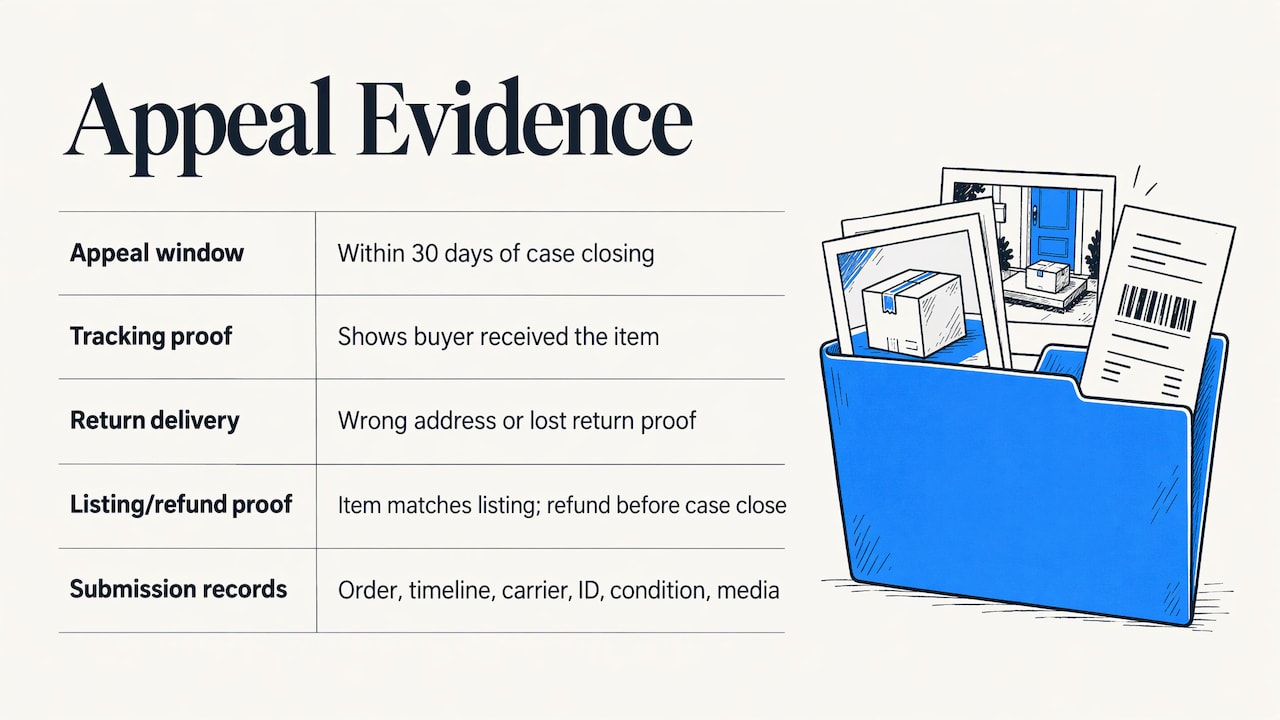
If eBay decides against you, you can appeal by providing new information within 30 days of the case closing. Acceptable new evidence includes tracking that shows the buyer received the item, proof that a returned item was delivered to the wrong address or lost, documents showing the item matches the listing, and proof of a refund before the case closed. Your pre-shipment photos and unboxing video belong in that submission, organized by order record, return timeline, carrier proof, item identification and condition.
What to avoid when you suspect fraud
The moments after a suspicious return are when sellers make avoidable mistakes.
- Do not discard or reuse the packaging. The label, box and inner packing are evidence until the case is closed.
- Do not issue a second refund by accident. Check the account to confirm whether a refund has already gone out before taking another step.
- Do not move the dispute off eBay. Messages, offers and refunds outside the platform can weaken your position, and some buyers use the conversation to push for feedback concessions. Our guide on feedback extortion explains how to keep the evidence instead.
- Do not accuse in writing without proof. State what differs, with photos, and let the process decide intent.
- Do not wait. Missing the response windows can forfeit the platform remedy.
Beyond eBay: chargebacks and serious losses
For larger losses, a law firm's overview of eBay fraud notes that the first channel is eBay Seller Protection, with a contested chargeback or a civil claim as backup, and reporting to the FTC and the FBI's IC3 for substantial amounts. Early evidence preservation strengthens each of those routes. For how payment disputes fit in, see our guide to eBay chargeback protection in the US, and for the limits of platform coverage, what eBay seller protection covers.
Our perspective: the missing deterrent
Since 2008, eBay sellers have not been able to leave negative feedback for buyers. That change removed the one public signal that told other sellers a buyer had a history of problems. Fraud policies and appeals deal with a single case at a time, so a buyer who was refused or flagged on one account can start the same pattern on another seller's listings.
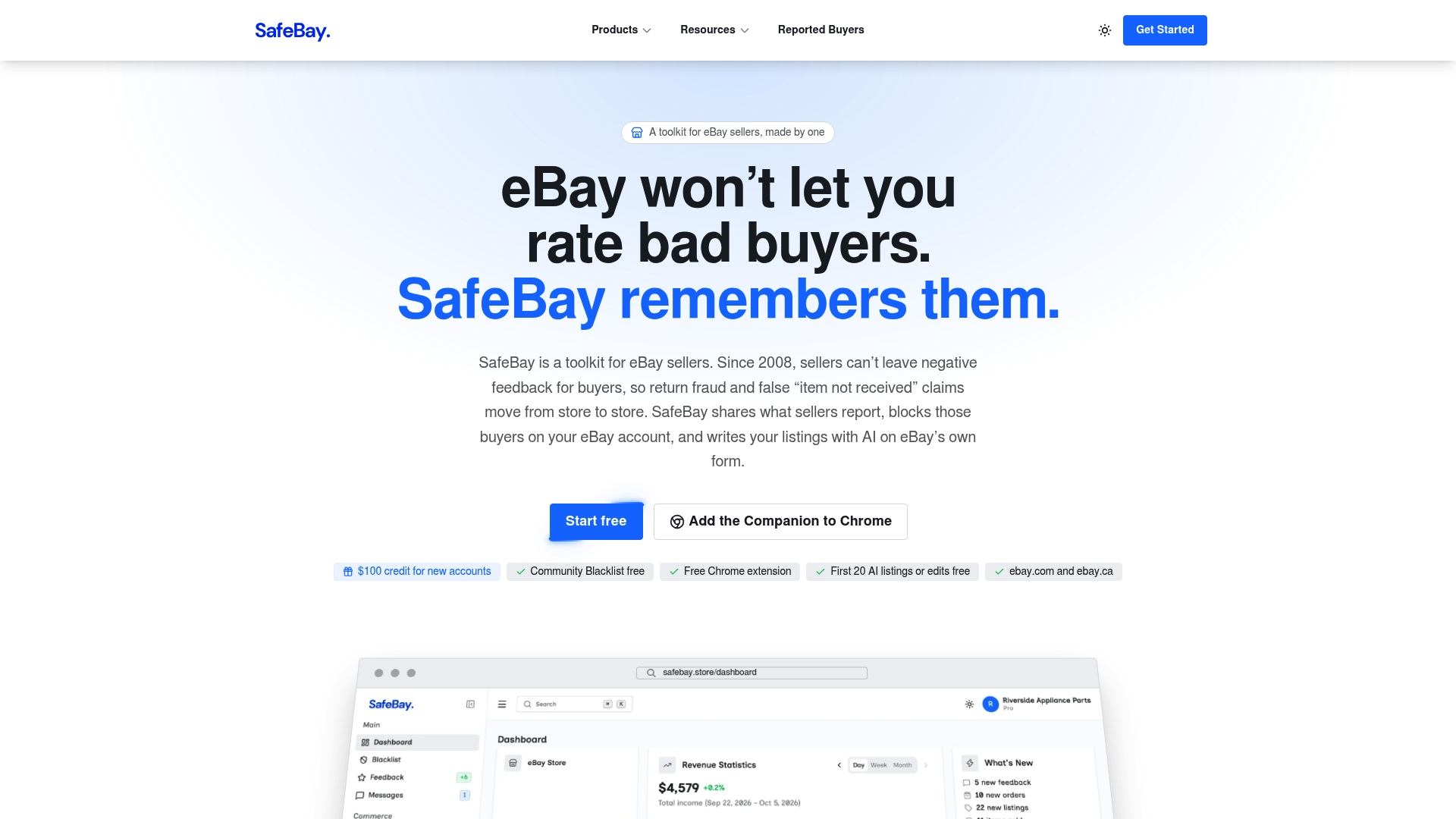
We built SafeBay around that gap. Sellers report adverse buyer behavior with evidence, the reports are reviewed, and the confirmed ones are shared across the community. The free Chrome extension syncs those blocks to your eBay Blocked Buyers list, so the protection works where you already work. We separate private and public blocks, keep the reasons and dates for each listing, and support appeals, because a blacklist is only useful when it is accountable.
Our view is that documentation and community reporting belong together. Your photos and video win the individual case, and a shared record helps prevent the next one.
Mykola
Stopping repeat offenders with SafeBay
Evidence handles the case in front of you. The harder problem is the buyer who returns tomorrow under a new order. SafeBay lets you report an eBay buyer with your evidence, check a buyer's status before you ship, and sync community-reviewed blocks to your eBay Blocked Buyers list through the SafeBay Companion extension. You can read how the system works on the return abuse protection page and the buyer blacklist page.
The Free plan costs $0 per month and covers basic features with limited AI usage. Basic is $9.95 per month and Pro is $59.95 per month, with higher limits and advanced features. Enterprise is $599.95 per month. You can compare the plans on the SafeBay home page.
Sellers who want a fuller walkthrough can read our guide on return fraud prevention and response.
A simple weekly routine
Prevention works when it is small enough to repeat. A routine that fits into a normal week:
- Photograph and film every order above your own risk threshold, for example any item where a single loss would exceed a week's profit.
- Review open return requests daily so no 3-business-day window lapses.
- Log the outcome of each suspicious return, with the order number, the discrepancy and the date you reported it.
- Report confirmed abusers, with the evidence, so other sellers benefit from your record.
- Check unfamiliar buyers on high-value listings before you ship.
High-ticket, easily resold items attract more swaps, and a longer handling time can give you room to review orders. Sellers in the eBay seller scams guide will find a similar 72-hour approach for other scam types.
FAQ
Does eBay protect sellers from return fraud?
Partly, and conditionally. eBay's abusive buyer policy lists return misuse as a violation, and eligible sellers can report the buyer, deduct from the refund in some cases and have related negative feedback removed. Protection depends on responding on time and following eBay's selling policies, so keep your evidence and your timeline in order.
What should I do first if a buyer returns a different item?
Do not open or discard anything. Photograph and weigh the sealed package, film the unboxing, compare serial numbers with your pre-shipment photos, and report the difference through the return request within eBay's response window. Keep the packaging and item until the case is closed.
Can I appeal if eBay sides with the buyer?
Yes. You can appeal by providing new information within 30 days of the case being closed. Useful new evidence includes tracking that shows delivery to the buyer, proof the return went to the wrong address, and documents showing the item matched the listing.
Can I leave negative feedback for a fraudulent buyer?
No, sellers have not been able to leave negative feedback for buyers since 2008. What you can do is report the buyer through eBay, and report them with evidence to SafeBay's community blacklist so other sellers can block them.
Sources
- Abusive buyer policy | eBay
- Seller protections | eBay
- How to handle a return request as a seller | eBay
- Ask eBay to step in and help for sellers | eBay
- Appeal eBay's decision about a return or missing item | eBay
- eBay Money Back Guarantee policy
- eBay Return Tips
- 2022 Consumer Returns in the Retail Industry
- Return Abuse Costs 6x More Than Return Fraud
- Return Fraud on eBay: What, Why, How and eBay's Response
- 15 eBay scams and how to spot and avoid them
- Return Fraud Proof Checklist for eBay and Amazon Sellers
- eBay Fraud: Recovering Losses and Fighting False Claims
- eBay Return Scams: Wrong Item, Empty Box, or Damaged Return?
- eBay Shipping Policy 2026