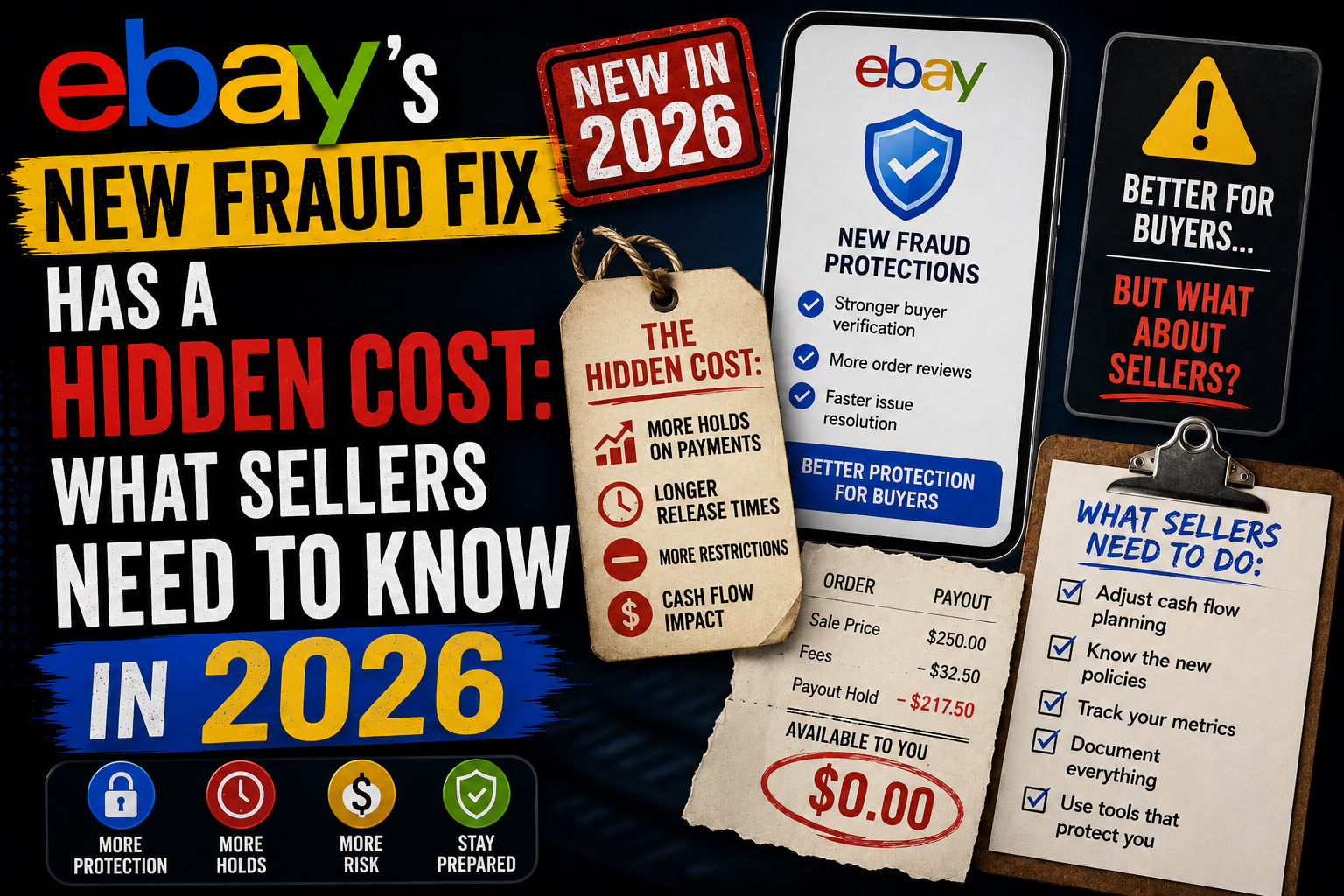
eBay just rolled out its most aggressive fraud protection update in years—and it comes with a catch that's dividing the seller community. The 2026 seller protection upgrades tackle two of the platform's oldest scams: Item Not Received (INR) claims and same-zip tracking fraud. But there's a requirement buried in the fine print: you only get the best protection if you buy shipping labels directly through eBay.
For power sellers who've spent years optimizing their shipping costs through third-party providers, this feels less like protection and more like a paywall. Let's break down what's actually changing, what it costs, and whether the trade-off is worth it.
Key Takeaways
- Automatic INR reimbursement: If a buyer files "Item Not Received" and the package shows delivered after you refund, eBay now refunds you—but only if you used an eBay shipping label.
- GPS-level tracking stops same-zip scams: eBay now uses carrier latitude/longitude data to verify return deliveries to your exact address, blocking fraudulent returns shipped to random addresses in your zip code.
- The eBay label requirement is controversial: Power sellers who negotiate their own carrier discounts or use 3PLs see this as forced ecosystem lock-in that cuts into margins.
- Real fraud protection, but at a hidden cost: The technology upgrades are legitimate, but tying them to eBay labels shifts fraud protection from a platform standard to essentially a paid feature.
- Complementary tools still matter: Even with eBay's upgrades, proactive fraud prevention through community blacklists and buyer vetting remains critical for serious sellers.
How eBay's 2026 Protection Handles INR Claims
INR claims have been a thorn in sellers' sides since the platform launched. A buyer says the item never arrived, you're forced to refund, then the package shows up at their doorstep three days later—and you're out both the item and the money. eBay's calling this update an "investment we're making directly with you," but the implementation reveals important limitations.
Automatic Seller Reimbursement on Late Deliveries
Here's the new process: If a buyer files an INR claim, you issue the refund, and tracking later shows the package was delivered, eBay automatically refunds you the payout. No appeal process, no waiting weeks for resolution—the system detects the delivery and credits your account.
The catch? This only works when you purchase shipping through eBay. According to eBay's official explanation, when you use labels from Pirate Ship, ShipStation, or your own carrier accounts, "we can't see it"—meaning they claim they don't have access to the full carrier data stream needed to verify post-delivery status.
Improved Tracking Display to Prevent INR Claims
eBay also redesigned how tracking appears in Seller Hub and buyer views. The unified tracking interface gives buyers clearer, real-time delivery status, reducing the "Where's my order?" messages that often escalate into INR claims. Better communication means fewer disputes in the first place—a smart preventive approach that benefits everyone regardless of which labels you use.
The Same-Zip Tracking Scam Gets a Real Defense
If you've been selling on eBay for more than a year, you've probably heard horror stories about same-zip tracking fraud. Here's how it works: A buyer initiates a return, but instead of shipping your item back, they send an empty box or a rock to a random address in your zip code. When tracking shows "delivered" in your zip, eBay's automated system forces a refund—even though you never received the return.
New Defense: Carrier Latitude and Longitude Data
eBay's 2026 update directly addresses this scam with what they're calling an "unprecedented level of data" from USPS, FedEx, and UPS. The platform now receives latitude and longitude coordinates for deliveries, allowing them to verify that a return was actually delivered to your precise address, not just somewhere in your zip code.
When a return shows delivered, eBay's system checks: "Was this package delivered to the seller's registered business address?" If the coordinates don't match, the system can protect you preemptively before a refund is processed. This is a genuine technological upgrade that could eliminate one of the platform's most frustrating fraud vectors.
But once again, eBay ties this protection exclusively to eBay-purchased labels, arguing that only their direct carrier integrations provide the granular GPS data needed.
Why Power Sellers Are Pushing Back on the Label Requirement
The seller community's response has been split. Small-volume sellers who already use eBay labels see this as a win. But power sellers—those shipping hundreds or thousands of items monthly—are questioning both the technical justification and the business implications.
The "We Can't See It" Argument Doesn't Add Up
When you upload tracking from any third-party source, both buyers and sellers see the same delivery information in eBay's interface. Carriers provide standardized tracking APIs that update across all platforms. So when eBay claims they "can't see" data from non-eBay labels, many sellers aren't buying it.
If eBay can display tracking status from Pirate Ship labels in real-time to buyers, why can't that same data trigger automated reimbursements? The technical explanation feels incomplete, leading sellers to suspect this is more about revenue than capability.
Cost and Flexibility Trade-offs
Power sellers often negotiate volume discounts with carriers or use fulfillment centers that provide bundled shipping. eBay's label prices, while competitive for casual sellers, frequently run higher than what high-volume operations can secure independently. Being forced onto eBay labels means absorbing those cost differences on every shipment.
There's also the flexibility issue. Some sellers use specialized packaging, international logistics partners, or multi-carrier routing that works better outside eBay's system. The new policy creates pressure to standardize on eBay's shipping infrastructure even when it's not the optimal choice for your business model.
The Authenticity Guarantee Precedent
This isn't eBay's first time tying protection to label purchases. With Authenticity Guarantee for sneakers, eBay already structured loss and damage protection around FedEx labels bought through the platform. Sellers see a pattern: valuable protection features being monetized through shipping revenue requirements.
Mixed Track Record on eBay's Own Labels
In February 2025, eBay Standard Envelope (ESE) experienced a tracking update glitch that triggered false INR claims against sellers who'd done nothing wrong. Sellers who relied exclusively on eBay's shipping products got burned by eBay's own technical failures. That history makes sellers hesitant to go "all in" on eBay labels when the platform's infrastructure has shown vulnerabilities.
Real-World Impact: What This Means for Different Seller Types
The 2026 eBay seller protection updates will affect different seller segments in distinct ways. Here's how the changes might play out across three common seller profiles.
Casual and Part-Time Sellers
If you're shipping 10-50 items per month and already use eBay labels for convenience, this is mostly upside. You get automatic INR reimbursement and same-zip fraud protection without changing anything about your workflow. The cost difference between eBay labels and alternatives is minimal at this volume, so the protection is essentially free.
Growing eBay Businesses (100-500 Items Monthly)
This segment faces the toughest decision. You're at the volume where shipping cost optimization starts to meaningfully impact profit margins, but you're also experiencing enough fraud attempts that the new protections have real value. You'll need to calculate whether the fraud savings outweigh the increased shipping costs from switching to eBay labels.
Hypothetical scenario: You ship 300 items monthly at an average eBay label premium of $0.75 per shipment compared to your current 3PL. That's $225/month in additional shipping costs. If you're losing 3-4 items monthly to INR or same-zip fraud at an average $60 per incident, the protection pays for itself. But if your fraud rate is lower, you're paying for protection you don't need.
High-Volume Operations (1,000+ Items Monthly)
Power sellers with negotiated carrier contracts and fulfillment center integrations face the biggest disruption. The cost delta between eBay labels and your existing shipping infrastructure could run thousands of dollars monthly. At this scale, fraud prevention is already handled through sophisticated buyer screening, signature requirements on high-value items, and detailed documentation practices.
For these sellers, the eBay label requirement feels like being forced to pay for protection you've already built yourself, while giving up the competitive advantage of your optimized shipping operations.
What eBay's Updates Don't Cover—And Why You Still Need Proactive Protection
Even with GPS-verified tracking and automatic INR reimbursement, eBay's 2026 updates address only reactive fraud protection. They help you recover losses after a scam attempt, but they don't prevent problem buyers from targeting you in the first place.
That's where community-driven fraud prevention becomes critical. The same-zip scam fix is excellent, but what about buyers who file false INAD (Item Not As Described) claims? Or serial returners who abuse eBay's return policies across dozens of sellers? Or feedback extortionists who threaten negative reviews unless you provide partial refunds?
eBay's platform updates don't give you visibility into a buyer's history across other sellers. You still can't see if a buyer account has filed 47 return requests in the past six months or has been flagged by hundreds of other sellers for problematic behavior.
This is where tools like SafeBay complement eBay's official protections. SafeBay's community buyer blacklist lets you see risk scores for buyers before they purchase from you, based on real experiences shared by thousands of other sellers. You can block problematic buyers proactively, track return fraud patterns, and access the collective knowledge of the seller community—all through a free platform built by sellers for sellers.
While eBay handles the backend fraud detection, SafeBay gives you frontend fraud prevention: the ability to avoid problem transactions before they happen. The combination of eBay's improved reactive protections and SafeBay's proactive buyer vetting creates a much stronger defense than either approach alone.
The Bottom Line: Protection with a Price Tag
eBay's 2026 fraud protection rollout represents genuine technological progress. GPS-level carrier data can legitimately stop same-zip tracking scams, and automatic INR reimbursement eliminates a massive pain point for sellers. The fraud fixes are real, and for many sellers, they'll provide meaningful financial protection.
But by making eBay labels the gatekeeper to these protections, eBay has shifted fraud protection from a platform standard to what feels like a paid feature. Power sellers see it clearly: "We'll protect you from scams, but only if you buy postage from us." That's the hidden cost in the headline—not a direct fee, but a structural requirement that funnels shipping revenue to eBay in exchange for fraud coverage.
Whether the trade-off makes sense depends entirely on your business model, shipping volume, and current fraud exposure. Calculate your numbers, weigh the costs against the protections, and make the decision that works for your specific situation.
And regardless of which labels you choose, remember that platform-level fraud protection only goes so far. Serious sellers need layered defenses—and that means combining eBay's reactive protections with proactive fraud prevention through community intelligence. Try SafeBay's free buyer blacklist and see how community-driven protection helps you stop bad buyers before they become costly problems.