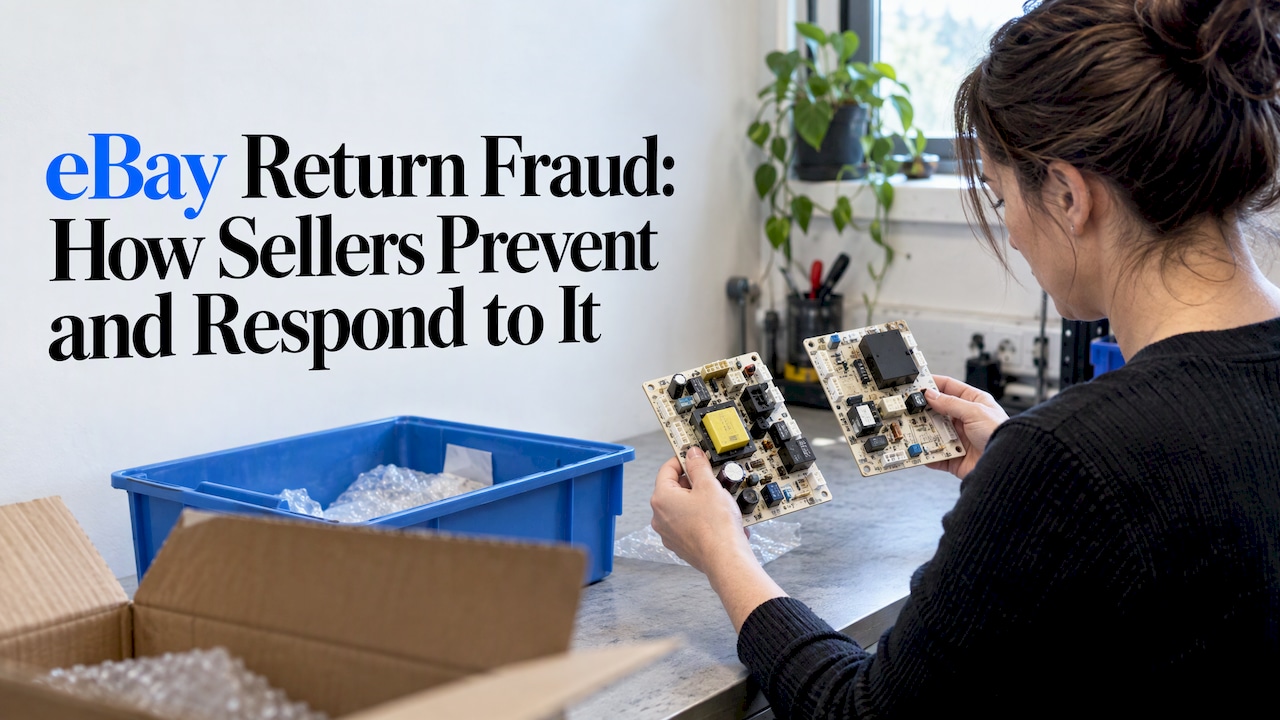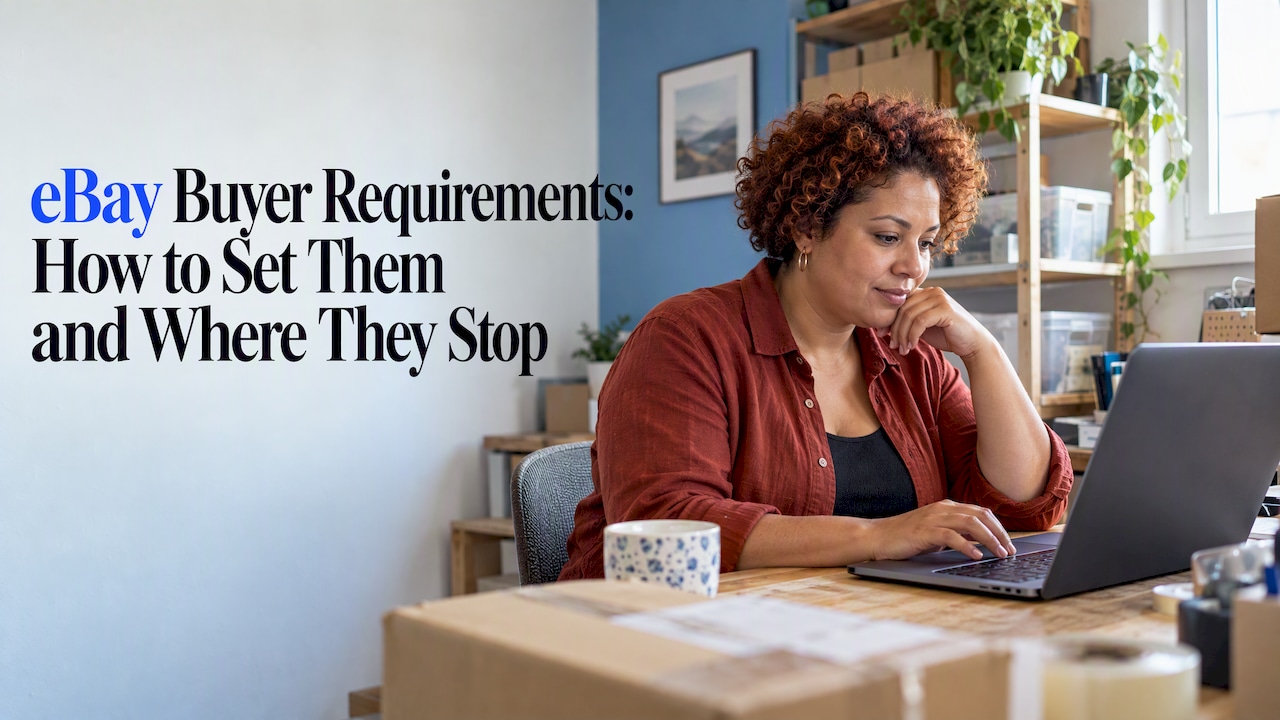
eBay buyer requirements are account-level filters that stop certain buyers from bidding on or purchasing your items, and you set them in the Selling preferences section of My eBay. They work well against predictable problems such as unpaid items and excluded delivery addresses. They do not identify a buyer who is simply abusive or who commits return fraud, because that behavior is not something the filters measure. This guide explains what the requirements cover, how to configure them, how they differ from the Blocked Buyers List, and what to add when they are not enough.
What buyer requirements are and what they filter
eBay gives sellers control over who can purchase from them. According to eBay's help page on blocking buyers, sellers can restrict purchasing based on criteria that include buyers with unpaid items, buyers who have exceeded a set number of purchases in the last 10 days, and buyers whose delivery addresses fall in locations you have excluded from shipping. eBay's setting buyer requirements page describes the same feature set and notes that you will usually want as many eligible buyers as possible, which is the trade-off every setting involves.
It helps to separate the three criteria by the problem each one addresses:
| Requirement | Problem it addresses | Main risk of setting it too tightly |
|---|---|---|
| Unpaid items | Buyers who win or purchase and then do not pay | Blocking a buyer who had one honest mistake |
| Purchase limit in 10 days | Buyers who buy in bulk and may be reselling, testing stolen cards, or overwhelming your stock | Turning away legitimate repeat customers, especially for low-price consumables |
| Excluded shipping locations | Orders to addresses you do not ship to, such as freight forwarders or regions you consider high risk | Losing international demand you could have served |
Each rule is a statistical shortcut. It catches a pattern that often goes with trouble, not trouble itself. A buyer with a clean record on all three filters can still file a false "item not as described" claim, return a different item than the one you sent, or send abusive messages.
How to set buyer requirements step by step
The path is short. Based on the instructions eBay publishes, the process in a desktop browser is:
- Sign in and go to Selling preferences in My eBay.
- Scroll down to Buyer requirements and select Edit next to the block option.
- Enter your preferences for each filter you want to use.
- Select Submit.
The settings apply to your whole account, not to one listing, so a change affects everything you have active. Make changes deliberately, and write down the values you chose and the date. Sellers who skip this step often cannot work out later why their sales dropped or why a particular buyer was allowed through.
Choosing starting values
There is no universal correct number, and eBay does not publish one for every category. A reasonable approach is to start from the problem you actually have:
- If you have lost final value fees and time to non-paying buyers, enable the unpaid-item filter first. Seller communities commonly suggest allowing no more than one or two recent unpaid cancellations, but treat that as a starting point you adjust against your own order history.
- If you sell items that are attractive to resellers or to fraud rings, such as limited-stock electronics or collectibles, the 10-day purchase limit is worth testing. Set it above the quantity a normal household would buy.
- If you have already refused to ship to certain regions, make sure your excluded locations are set up, so that buyers there cannot complete a purchase and then wait for you to cancel.
After two to four weeks, compare cancelled orders, unpaid items and conversion against the previous period. If problems fell but sales held steady, the settings are doing their job. If sales dropped sharply, loosen the least productive filter first.
Buyer requirements versus the Blocked Buyers List
Sellers often treat these as one feature, but they work differently.
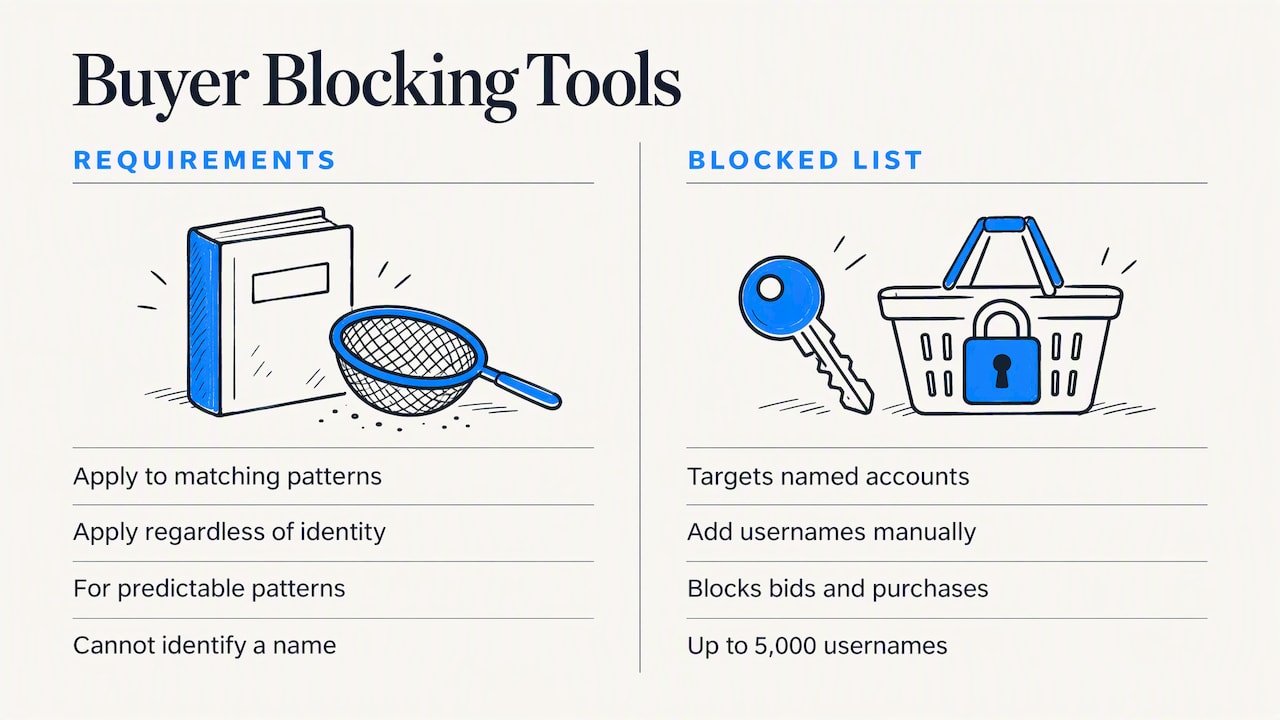
Buyer requirements are rules. They apply to anyone who matches a pattern, whoever they are. The Blocked Buyers List is a list of named accounts. You add a username, and that person cannot bid on or buy your items. According to eBay, you can manually add up to 5,000 usernames. Our own walkthrough, How to Block Buyers on eBay, covers the mechanics and what to do after a block.
Use the rules for patterns you can predict, and the list for individuals you have already had a bad experience with. Both are needed, since a rule cannot know a name and a list cannot anticipate a stranger.
Where the native tools stop
The gap that matters most is information. The Blocked Buyers List is manual and does not automatically capture malicious actors across the platform. It is also private to each account. Many sellers assume that when they block a fraudulent buyer, other sellers are protected too, but that is not the case: a known bad actor remains free to buy from every seller who has not blocked them individually. We cover this in more detail in why eBay's blocked buyer list isn't enough.
There is a second structural issue. Since 2008, sellers have not been able to leave negative feedback for buyers, so the public record that once warned sellers about difficult buyers does not exist. Each seller therefore learns about return fraud, false claims and abusive messages only after the damage is done on their own account.
Three situations show where the filters do nothing:
- A first-time order from a serial returner. The buyer has no unpaid items, buys one item, and returns an empty box or a damaged substitute. No requirement is triggered.
- A buyer blocked by you who returns under a new account. Requirements are not tied to a person, only to what the new account's history shows, and a new account has none.
- A buyer who has defrauded ten other sellers. None of those sellers' blocks reach you.
Staying within eBay's rules when you block
Control over your listings is not unlimited. eBay's rules and policies for buyers expect professional behavior from both sides, and sellers remain bound by the User Agreement and applicable law. In practice, blocking someone because of a protected characteristic or another non-compliant reason can lead to account restrictions or suspension. Keep your reasons behavioral and factual: unpaid items, abusive messages, fraudulent claims, or an address you do not ship to.
Keep a record for each person you block. A short note with the order number, the date and what happened is enough. If eBay ever asks why a buyer was excluded, or if you later want to review whether a block is still justified, you will have an answer.
Our perspective on buyer requirements
We built SafeBay because the tools sellers already have solve the problem of volume but not the problem of knowledge. Buyer requirements are sensible and every active seller should use at least some of them. The limit is that each seller is working alone, and a buyer who commits return fraud can move from one store to the next with no record following them.
Our approach is to treat buyer behavior as shared information that has to be accountable. That is why reports on SafeBay are made with evidence, reviewed before they are shared, and kept with their reasons and dates. Private blocks are separated from public ones, and appeals are supported, so a buyer who was reported wrongly has a way to contest it. A blacklist without those safeguards would be unfair to buyers and, over time, unreliable for sellers.
We also think sellers should keep their expectations realistic. No tool removes fraud entirely, and the most useful habit remains the simple one: record what happened, report it with evidence, and review your own settings regularly.
— Mykola
Adding shared buyer information with SafeBay
If you want the information that eBay's own settings do not provide, SafeBay's community buyer blacklist collects reports from sellers, reviews them, and syncs the result to your eBay Blocked Buyers list through the free Chrome extension, SafeBay Companion. You can also check a buyer's status before you ship, and the extension supports real-time risk alerts.
The free plan costs $0 per month and includes basic features with limited AI usage. Paid plans are Basic at $9.95 per month and Pro at $59.95 per month, with Enterprise at $599.95 per month for larger operations. You can compare them on the SafeBay plans page. Because the tool writes to the same Blocked Buyers list you already use, it works alongside your buyer requirements and does not replace them.
Reporting a problem buyer
The value of a shared list depends on the quality of its reports. Whether you use SafeBay or only your own notes, a useful report includes:
- The buyer's username and the order or item number.
- The date and the specific behavior (for example, an empty box returned, or a claim contradicted by your photos).
- Evidence such as tracking records, photos taken at packing, and message screenshots.
- What you asked eBay to do and how eBay resolved the case.
When you are ready, our guide on how to report an eBay buyer explains the process, and the report form is the place to submit one. The full blacklist process describes how reports are reviewed before they reach other sellers.
A practical review routine
Settings that were right a year ago may be wrong now. A quarterly routine keeps them useful:
- Export or list your recent problem cases. Group them by type: unpaid, returns, claims, abusive messages.
- Check which filters would have caught each one. If none, a rule is not the answer and a block or report is.
- Review the cost. Estimate how many legitimate buyers a strict setting turned away, using any messages or inquiries you received from blocked buyers.
- Update the Blocked Buyers List. Add new names and remove those that no longer need a block.
- Document the changes. One line per change with the date.
Sellers who sell high-value or easily resold items may want a shorter cycle, monthly instead of quarterly, because fraud patterns shift faster in those categories.
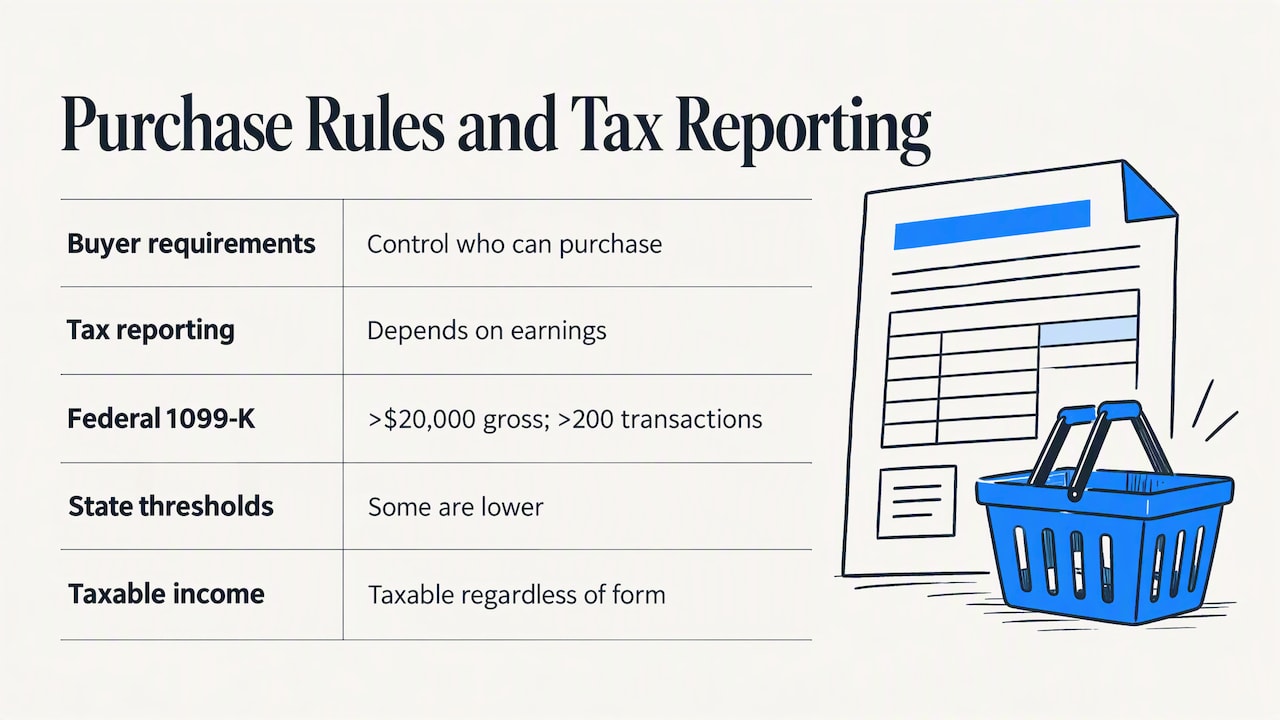
Do buyer requirements affect taxes or reporting?
No, but sellers often search for both topics together, so the distinction matters. Buyer requirements control who can purchase. Tax reporting depends on how much you earn. For the federal Form 1099-K, the IRS Taxpayer Advocate Service states that third-party settlement organizations are required to report only above $20,000 in gross payments and 200 transactions, following the reinstatement of the earlier threshold. That is a reporting threshold for the platform, not a definition of taxable income. The IRS fact sheet also notes that some states keep lower thresholds, so you may receive a form even when the federal rule does not require one, and that income remains taxable regardless. Keep records of your cost basis, and speak with a tax professional or CPA about your own situation.
FAQ
Can buyers see that I blocked them or set requirements?
Buyer requirements work silently in the sense that they stop the purchase, but a buyer who is affected may see that they cannot buy and contact you. Blocking a username is likewise not announced to the buyer by eBay. Decide in advance how you will answer messages from people who ask why they cannot purchase.
Is the Blocked Buyers List shared with other sellers?
No. The list is private to your account, so a buyer you block can still purchase from every other seller. That is the main reason sellers add an outside source of buyer reports on top of the native tools.
How many buyers can I block on eBay?
eBay's help page states a limit of 5,000 usernames on the Blocked Buyers List. Buyer requirements are rules rather than names, so they do not count toward that limit.
Are buyer requirements enough to prevent return fraud?
Not by themselves. They filter on unpaid items, purchase frequency and shipping location, none of which indicates how a buyer behaves after delivery. To reduce return fraud, pair the settings with careful packing records, evidence-based reports and a way to check buyers before shipping.