
Effective eBay fraud prevention for a seller has two layers: process rules that stop most scams before an order ships, and a way to stop the same problem buyer from returning under your account. eBay's own protections cover the first layer in part, but since 2008 sellers cannot leave negative feedback for buyers, so a buyer who abuses returns or files false claims leaves no public trace. SafeBay was built for that gap: sellers report buyer behavior with evidence, the reports are reviewed and shared, and a free Chrome extension syncs the result to your eBay Blocked Buyers list.
This guide covers the fraud types U.S. sellers meet, how to tell a real eBay alert from a fake one, what to do at each stage of an order, how the appeal clock works, and how to make blocking repeatable instead of a one-off reaction.
The fraud patterns U.S. eBay sellers actually face
Sellers tend to think of fraud as one problem, but the patterns call for different defenses. The U.S. Secret Service groups online sales and auction fraud into non-delivery, non-payment and phishing, and a certified fraud examiner's 2025 guide for new eBay sellers breaks the seller side into five schemes:
- Fake payment. The buyer shows or claims a payment that never reached you, then pressures you to ship.
- Item not received. The buyer says the package never arrived, even though tracking shows delivery.
- Return fraud and partial-refund pressure. The buyer claims a defect that does not exist and demands a partial refund while keeping the item.
- Switcheroo returns. The buyer sends back a different, damaged or counterfeit item in place of the one you shipped.
- Feedback extortion. The buyer threatens a negative review unless you refund or add something.
The guide notes that switcheroo returns can fall under federal mail fraud or postal inspection laws when the evidence is strong, which is why the evidence habits below matter as much as the policies.
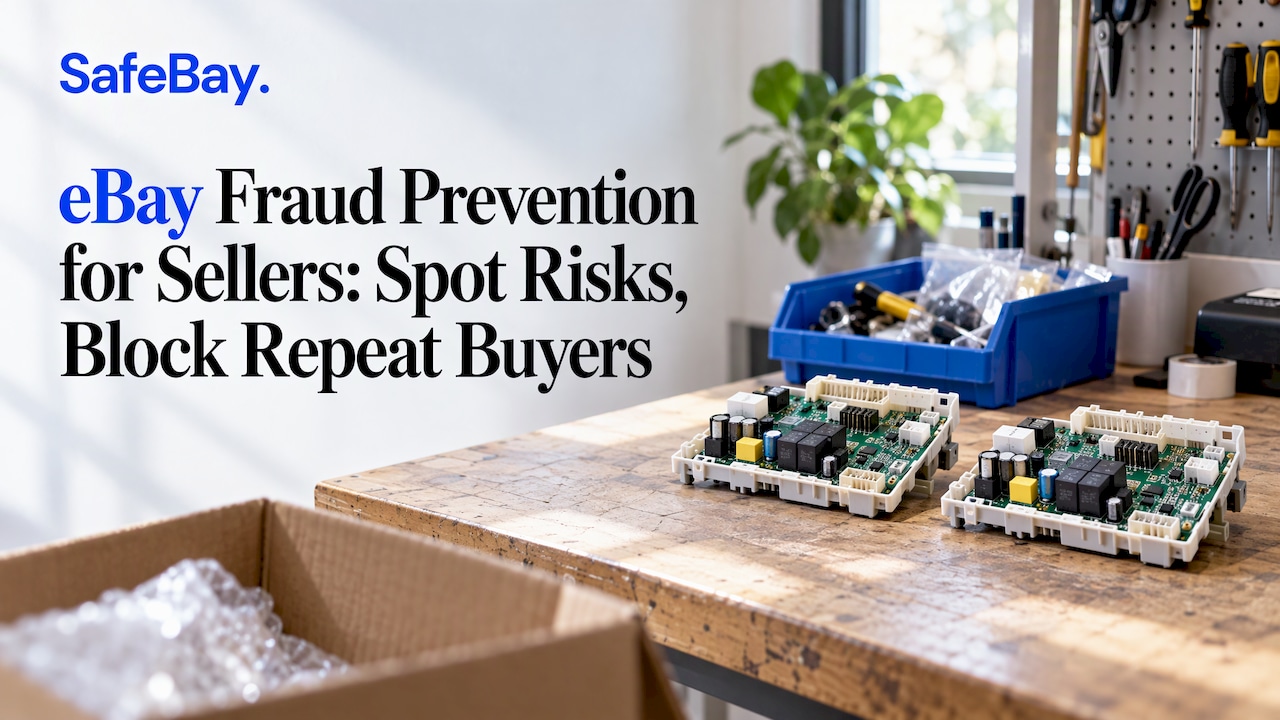
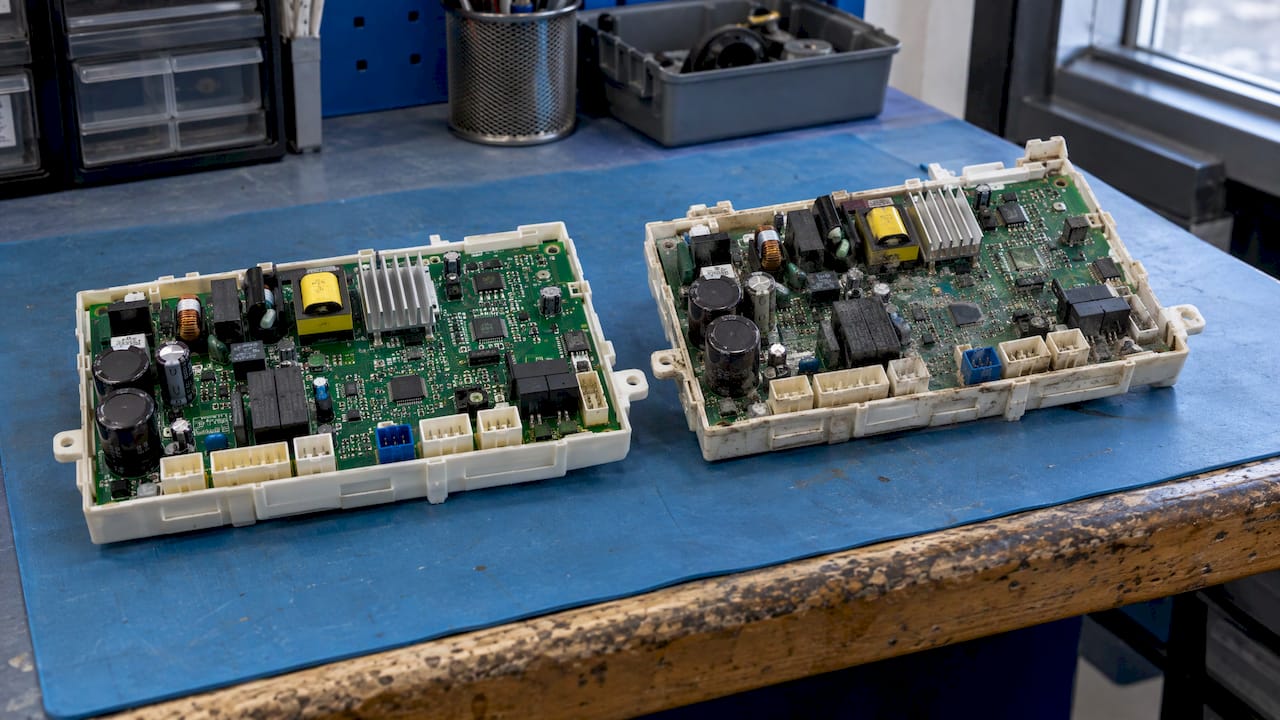
For appliance parts sellers, the switcheroo is especially costly. A returned control board or motor with a different serial number, or one that has been installed and damaged, looks nearly identical in a photo. A compatibility mismatch, where a buyer orders the wrong part and then claims the listing was inaccurate, is a close cousin and also ends up as a "not as described" case.
Warning signs that a buyer or message is not genuine
The Secret Service lists red flags that apply to sellers as well as buyers: requests to complete the deal offline, wire transfers or prepaid gift cards, requests for personal identifiers, and addresses such as post office boxes paired with free web email. In practice, check for these before shipping:
- The buyer asks to pay or communicate outside eBay.
- The buyer pays more than the price and asks you to send back the difference. eBay says never to accept overpayment, as covered in the payment section below.
- A new account with no history buys a high-value, easily resold item and asks for rush shipping to a different address.
- The buyer opens a case with wording that does not match the item, such as describing a feature your listing never claimed.
- The buyer mentions feedback or a case in the same message as a refund demand.
None of these proves fraud on its own. Together, or repeated across several of your sales, they are a pattern worth recording, and a recorded pattern is what makes a report credible later.
The second chance offer and other off-platform traps
The California Attorney General describes the second chance offer scam, where someone contacts losing bidders after an auction and asks for payment by wire off eBay. It targets bidders, but it affects sellers too: your listing and name get used to defraud people, and you may field the angry messages. Telling interested bidders that you will only transact through eBay is a sensible standing line in your listing or message templates.
How to tell whether an eBay alert is real
Sellers who expect problems are easy targets for fake alerts: a spoofed email claiming your account is restricted, or a message demanding that you verify payment details. eBay's guidance is consistent and simple.
- eBay states that real messages never ask for passwords or card details, never carry attachments and never use threatening language. Important messages are also copied to eBay Messages.
- When eBay restricts or suspends an account, it sends the notice to your registered email and to Messages. If there is no copy in Messages, it was not from eBay.
- If in doubt, close the email, type the eBay address into your browser or use the official app, and sign in there.
- Forward suspicious emails as attachments to spoof@ebay.com, as eBay's Security Center instructs. Fraudulent listings can be reported through the "Report this item" link at the bottom of the listing.
The general warning-sign list for ticket and marketplace scams applies here too; a short checklist of ticket scam warning signs shows the same urgency and off-platform payment tactics that fake eBay messages use, and it is a quick refresher for anyone who handles buyer messages on your team.
A separate kind of alert is a buyer-risk alert: a signal, inside your own workflow, that the person who just bought from you has a reported history. That is what SafeBay's real-time buyer risk alerts are for, covered further down.
Prevention at each stage of an order
Listing and communication
Most disputes start with an ambiguous listing. State condition, included parts, model numbers and compatibility precisely, and photograph serial numbers and model labels. For appliance parts, list the full set of compatible model numbers rather than a general category, since a vague compatibility claim is the easiest basis for a false "not as described" claim. SafeBay's AI listing generator builds titles, item specifics and prices directly on eBay, and its appliance parts compatibility lookup supports the same goal of listing the right part for the right model.
Keep all conversation inside eBay Messages. A record that lives on the platform is the record eBay reviewers can see. If buyer messages are a heavy part of your day, SafeBay's automated AI messaging and feedback replies keep replies consistent and prompt.
Payment
eBay's guidance on avoiding payment problems gives specific rules worth building into your routine:
- Prefer credit and debit cards, Apple Pay, Google Pay and PayPal; use cash only for local pickup.
- Use immediate payment for Buy It Now listings.
- Never accept an overpayment.
- Do not complete a sale that started on eBay off the platform: you lose eBay's protection and still owe the fees.
- If a buyer has not paid within 4 calendar days, you may cancel the order.
The last point leads to the common unpaid item problem. Our guide on what to do with an unpaid item and when walks through the sequence, and how to cancel an order as a seller covers the cancellation itself. For sellers who also take payments off eBay, such as at events or through other channels, this guide to chargeback protection practices explains how documentation of delivery and authorization supports a dispute.
Shipping and packing
Use tracking that shows delivery to the order address, since eBay treats proof of delivery to that address as a basis to rule against a false item-not-received claim (see the return policy section below). For high-value items, the fraud examiner's guide recommends recording the packing on video and photographing serial numbers before shipping. These take about a minute and are the strongest answer to a switcheroo return.
Returns
The return clock matters because missing it is a self-inflicted loss. Under eBay's return policy, a buyer can request a "not as described" return up to 30 calendar days after delivery, or longer if your policy allows. You must respond within 3 business days, and you have up to 2 business days after receiving the returned item to refund (eBay may auto-refund once tracking shows delivery).
The same policy says buyers lose Money Back Guarantee coverage for fraudulent or abusive behavior, for example:
- claiming non-receipt when there is proof of delivery to the order address;
- falsely claiming an item was not as described;
- returning an item other than the one received;
- using or damaging an item before returning it.
So when you open a returned parcel, document it before you do anything else: photograph the package as it arrives, the item's condition and the serial number against your outbound photos. Our guides on eBay return fraud prevention and response and on return fraud seller response cover the evidence step by step.
What eBay protects, and how appeals work
Seller protection is conditional, so it helps to know the terms before you rely on it. According to eBay's Seller protections page:
- U.S. Top Rated Sellers who offer returns of 30 days or longer get a return shipping label credit of up to $6 per return when a buyer falsely claims "not as described", plus automatic removal of related negative or neutral feedback, defects and open cases from service metrics.
- Top Rated Sellers with a strong service record can deduct up to 50% of a refund when an item comes back used or damaged.
- Protections are lost by taking transactions off eBay, misrepresenting item location, being rated "Very high" in Service metrics, or misusing protections through excessive false reports or partial-refund withholding.
- If a case closes in the buyer's favor, you can appeal in the Resolution Center within 30 days of the case closing with documentation or new information. If the decision is reversed, the final value fee is refunded and the defects are removed automatically.
In August 2025 eBay also announced a more flexible fulfillment-risk review: in most cases, sellers get a chance to resolve a concern such as unpaid balances, open claims or missing tracking before restrictions are placed, and funds are released automatically once tracking shows delivery. Accurate tracking therefore supports both your cash flow and your disputes.
Two practical points follow. First, the protections reward a clean record and documentation, which is why the evidence habits above come first. Second, they act after a claim has been opened. They do not stop a known problem buyer from placing the next order. For a deeper read on scope, see what eBay seller protection covers and how to qualify under the policy.
If a case involves what looks like a crime, such as a switcheroo with strong evidence, the Secret Service page directs victims to local law enforcement and the Internet Crime Complaint Center, and the fraud examiner's guide names the U.S. Postal Inspection Service for suspected postal fraud. Our own guide on acting within 72 hours on seller scams lays out an order of steps for the first days.
Closing the gap: blocking problem buyers across accounts
Since 2008, sellers have had no way to leave negative feedback for buyers. A buyer who files a false claim, returns the wrong item or refuses to pay can move on to the next seller without any public mark. eBay's Blocked Buyers list lets you block an account, but it only protects the store that built the list, and each seller learns about a bad buyer only after being burned.
A community blacklist addresses this directly. The approach works when it has four properties:
- Evidence. A report carries the facts of the incident, not a grudge.
- Review. Reports are checked before they are shared.
- Accountability. The reason and date for each listing are kept, and buyers can appeal.
- Control. You choose which blocks stay private to your store and which are public.
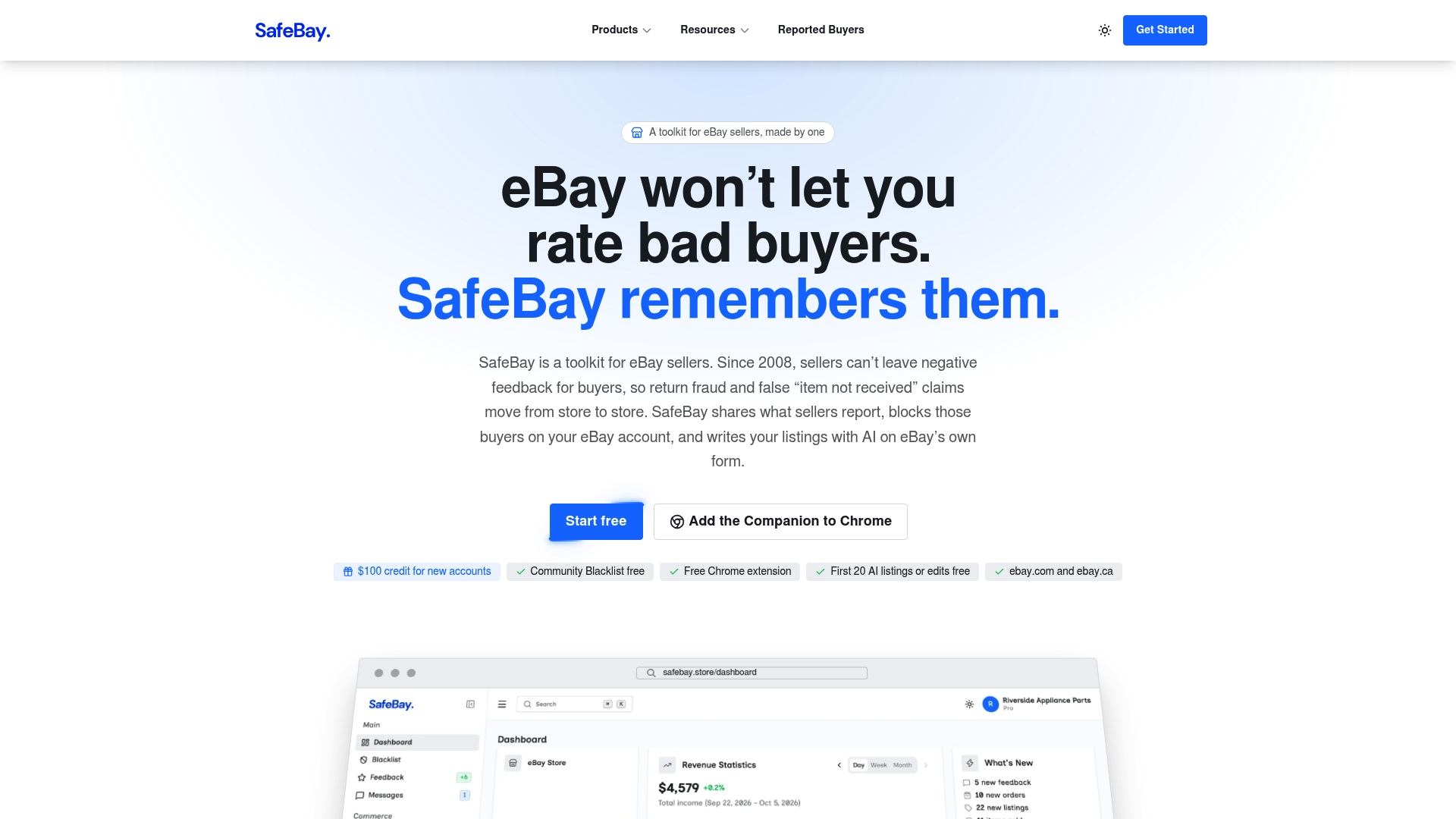
These are the properties SafeBay is designed around. You can report an eBay buyer with evidence, and reviewed reports are shared among sellers. The SafeBay Companion Chrome extension is free and syncs blocks to your eBay Blocked Buyers list automatically, so you do not maintain the list by hand. The buyer blacklist page describes how one block list serves your store, the community and eBay itself, and you can check an eBay buyer's status directly.
Which safeguard fits which risk
| Risk | First safeguard | Evidence to keep | Where SafeBay fits |
|---|---|---|---|
| Unpaid orders | Immediate payment on Buy It Now; cancel after 4 calendar days | Order and message history | Report repeat non-payers to the blacklist |
| Fake alerts and phishing | Check eBay Messages; sign in through the official app or address | Forwarded email to spoof@ebay.com | Not applicable; follow eBay's steps |
| Item-not-received claims | Tracking with delivery to the order address | Tracking record, delivery confirmation | Block buyers who repeat the claim |
| False "not as described" | Precise listing, serial number photos | Listing, photos, messages | Real-time buyer risk alerts; shared reports |
| Switcheroo returns | Video of packing, serial numbers recorded | Outbound versus returned photos | Report with evidence; community sync to Blocked Buyers |
| Feedback extortion | Respond through eBay only; do not concede | Messages with the threat | Report the behavior with evidence |
Before relying on any safeguard, confirm what it actually covers: eBay's protections have eligibility conditions, and a blacklist is only as strong as the evidence and review behind each entry. That is why the reporting standard, not the size of the list, is the measure that matters.
Putting a weekly routine in place
Fraud prevention works as a routine more than as a reaction. A workable cycle for a small seller looks like this:
- Daily: check eBay Messages for any account notice before trusting an email, and review new orders for the warning signs listed above.
- At packing: record serial numbers and short video for items above your own risk threshold.
- At returns: photograph the arriving package and compare the item to your outbound record before refunding.
- Weekly: review closed cases, appeal inside the 30-day window where you have documentation, and report buyers whose conduct was clear.
- Monthly: read your sales statistics for unusual return or refund clusters. SafeBay's orders dashboard and sales statistics show revenue by day, week, month and state, which makes anomalies easier to see.
Starting with SafeBay
SafeBay's published plans are Free at $0 per month, Basic at $9.95 per month, Pro at $59.95 per month and Enterprise at $599.95 per month, as listed on the SafeBay site in October 2026. The Free plan includes basic features and limited AI usage, and paid plans add advanced features and higher limits. The blacklist syncing runs through the free Companion extension, and the toolkit also includes AI listing generation, auto-relisting of ended items, automated messaging and feedback replies, and order management. Sellers can also browse the free seller tools, including a title builder based on titles that sold.
For a seller who has already lost an order to a repeat offender, the sensible first step is to install the extension and report the buyer with the evidence on hand.
Our perspective
Fraud on eBay persists because the incentives are lopsided. A buyer who abuses returns pays no visible price, while a seller pays in refunds, lost inventory and defects. Policies help after the fact, but they cannot know that the same account hit three other stores last month.
That is why we built SafeBay around shared, reviewed evidence. A report with photos, dates and a clear description of what happened is more useful to the next seller than any rating. We separate private and public blocks so that you decide what your store shares, we keep the reason and date for every listing so that each block can be examined, and we support appeals so that a mistake can be corrected.
We also think protection should sit inside the seller's normal workflow. A block list that you have to maintain in a spreadsheet gets stale, so the Companion extension syncs to your eBay Blocked Buyers list, and the AI tools for listings, messages and feedback replies run on eBay's own pages. The goal is fewer disputes and less time spent on them.
Mike Brydko
FAQ
Can I leave negative feedback for a bad buyer on eBay?
No. eBay has not allowed sellers to leave negative feedback for buyers since 2008. Sellers can block a buyer on their own account, and a community blacklist such as SafeBay's lets other sellers learn about the same buyer from a reviewed report.
How do I know whether an eBay email about my account is real?
Sign in through the official app or by typing the eBay address, then open Messages. eBay copies important messages there, so an email with no matching message is not from eBay. Forward it as an attachment to spoof@ebay.com.
How long do I have to appeal a case that eBay closed in the buyer's favor?
You have 30 days from the case closing to appeal in the Resolution Center, with documentation or new information. If the decision is reversed, eBay refunds the final value fee and removes the defects automatically.
Is the SafeBay Chrome extension free?
Yes. The Companion extension is free, and it syncs reviewed community blocks to your eBay Blocked Buyers list. The Free plan costs $0 per month, while Basic, Pro and Enterprise add advanced features and higher limits.
Sources
- Online Sales and Auction Fraud, U.S. Secret Service
- Scam Artists Posing As Sellers on eBay, California Attorney General
- eBay Fraud Schemes: A Certified Fraud Examiner's Guide for New Sellers
- Recognizing phishing phone calls and emails, eBay
- Account restrictions and suspensions, eBay
- Security Center: Report a Concern, eBay
- Avoiding payment problems for items you've sold, eBay
- Return policy, eBay
- Seller protections, eBay Seller Center
- Seller protection announcement, August 2025, eBay Seller Center
- Ticket scam warning signs checklist
- Chargeback protection guide